In June 2026, severe thunderstorms tore up Burke and left over 600 customers without power. Even though the trees that came down were removed within days, the harder questions involved the ones still standing. Can a tree with a torn limb, split branch union, or damaged canopy recover, or has the storm caused enough damage that it needs to come down?
What happens next depends on more than how bad the tree looks after the storm. The location and extent of the damage, the structure that remains, and the tree’s condition before the storm all factor into whether recovery is realistic.
Key Takeaways
- New leaning, root-plate movement, major trunk cracks, and hanging limbs are warning signs that warrant prompt professional assessment.
- A tree can sometimes survive substantial limb loss when its trunk and roots remain sound, but severe trunk, root, or crown damage can make removal the safest option.
- Storm-damaged trees can contain stored tension and may move unexpectedly; don’t cut or climb damaged trees unless you are properly trained and equipped.
- Any tree or limb threatening a house, driveway, walkway, road, or utility line deserves priority because the consequences of failure are greater.
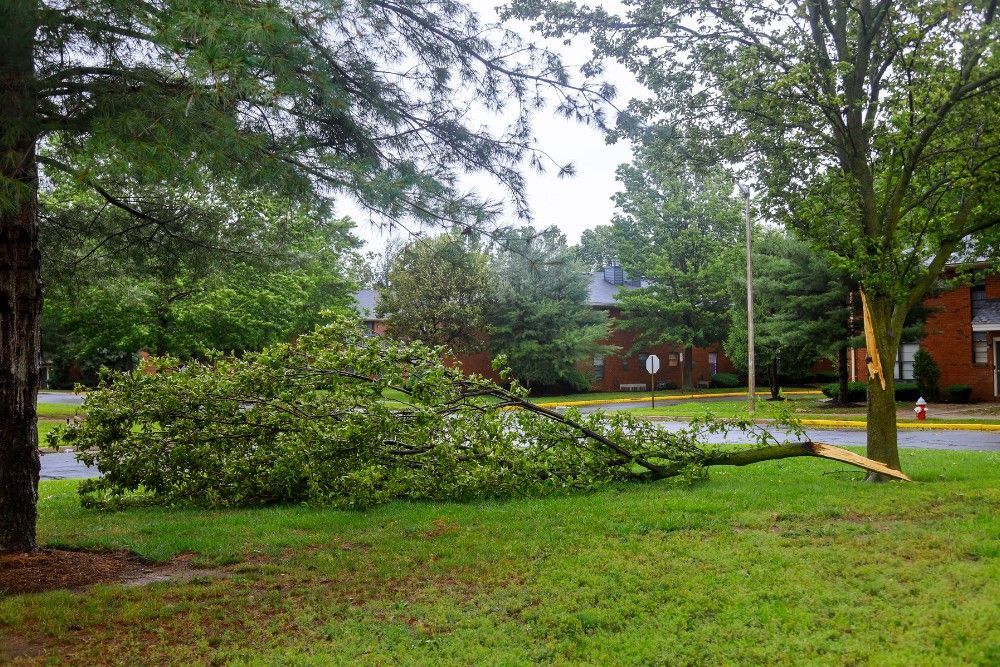
The pale tear on the trunk shows where this limb separated, and wounds like this are what an arborist checks for decay after a storm.
How Can You Tell If a Storm-Damaged Tree Can Be Saved?
A storm-damaged tree may be able to recover when the trunk, roots, and main structure remain intact, even if it has lost several branches. The amount of visible damage can look severe from the ground, but where that damage occurred matters as much as how much of the canopy was lost.
The tree’s condition before the storm matters, too. A healthy tree with sound wood and a full canopy may have more resources to recover than one that was already declining or structurally compromised.
Signs a tree may have a good chance of recovery include:
- The damage stopped at the limbs, not the trunk or the base
- The major structural branches are still attached
- The base held, with the trunk standing at its usual angle
- Enough live canopy remains to rebuild from
What Kind of Storm Damage May Require Tree Removal?
Damage to the trunk or root plate is what usually requires tree removal, though the right call depends on the specific tree. Damage that may make removal more likely includes:
- A severe split running through the main trunk
- Bark stripped from more than a third of the trunk’s circumference
- A lifted or cracked root plate
- A larger tree that has lost its top
Partial uprooting could also warrant removal, since a lot of the root system’s gone even if the tree can be pulled upright. Corrective pruning doesn’t reach an already-moved root plate, which is why removal is the safer outcome when any of these symptoms are visible.
Does Your Storm-Damaged Tree Need Immediate Attention?
Storm-damaged trees need immediate attention when a damaged or unstable tree could injure someone, damage property, or block access if it fails. Keep your distance from hanging limbs, newly leaning trees, and lifted root plates rather than approaching them for a closer look.
Call for 24/7 emergency storm response when a damaged tree or branch:
- Threatens a house, vehicle, walkway, or other frequently used area
- Is hanging or partially attached where it could fall
- Is leaning toward a structure after the storm
- Blocks a driveway, road, or other necessary access
When the tree is stable, the damaged area isn’t threatening people or property, and there’s no indication that failure is imminent, schedule a routine arborist assessment to determine what care the tree needs.
For trees or branches touching power lines, stay well away and contact the utility company.
What Happens If Your Storm-Damaged Tree Can Be Saved?
A storm-damaged tree that can be saved may need corrective pruning, ongoing care, and time to recover. Broken branches should be properly pruned rather than leaving torn or ragged stubs, which can interfere with the tree’s natural response to the injury. Wound dressings generally aren’t necessary; properly placed pruning cuts allow the tree to seal the injured area naturally.
Schedule pruning to remove damaged branches and address any remaining structural concerns. Depending on how much canopy was lost, an arborist may also recommend spreading corrective pruning over time rather than removing too much additional live growth at once.
Recovery continues after the damaged branches are addressed. Consistent watering during dry periods and mulch over the root zone can help reduce additional stress while the tree produces new growth. A follow-up inspection during the next growing season can show how well the canopy is recovering and whether any new concerns have developed.
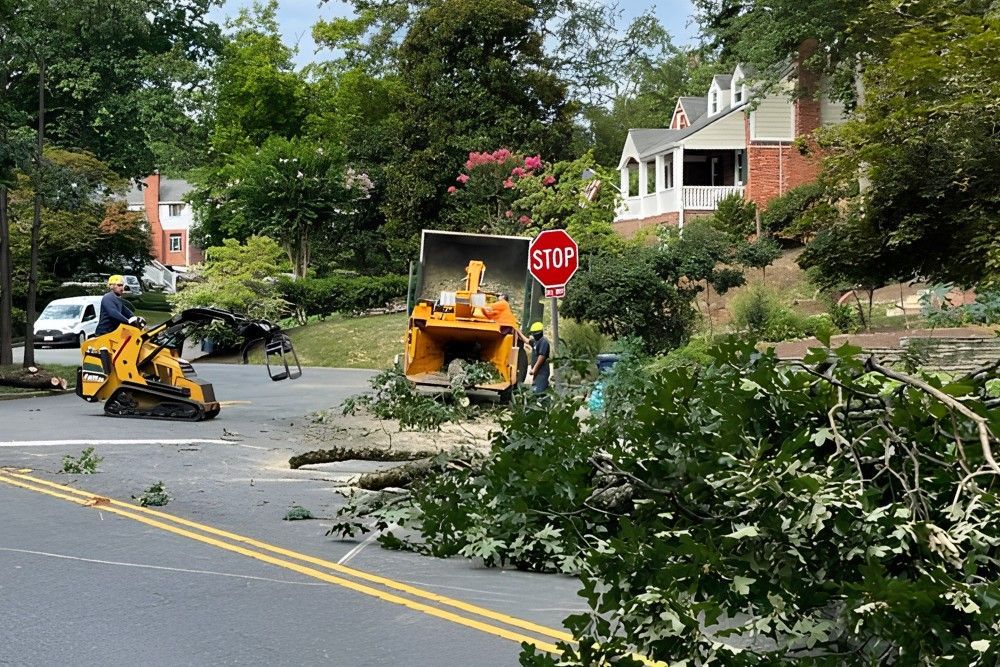
Storm debris blocking a street is the kind of damage that needs a crew the same day, not an appointment later in the week.
Frequently Asked Questions About Storm-Damaged Trees
Can a tree that split down the middle be saved?
A major split through a trunk or codominant union often makes removal the safest choice. Whether supplemental support has any role depends on how severe and repairable the defect is.
Will my leaning tree fall?
A leaning tree won’t necessarily fall, but a new or worsening lean after a storm can indicate that the roots or surrounding soil have shifted. Freshly lifted or cracked soil around the base makes the change more concerning. Until the tree has been assessed, keep people, vehicles, and other movable property outside the area it could reach if it fails.
How soon do I need to deal with a storm-damaged tree?
Storm damage that leaves a tree or branch unstable or threatening people or property should be addressed as soon as possible. Less urgent damage should still be assessed so you know whether the tree needs pruning, monitoring, or removal. After a widespread storm, scheduling may take longer as tree services prioritize immediate hazards.
Does homeowners insurance cover storm-damaged tree removal?
Coverage generally depends on whether the tree struck a covered structure. A tree that fell in the yard and hit nothing is often not covered at all, and policies that do pay for debris removal frequently cap the amount. Your carrier can confirm your terms.
Should I prune the broken branches myself?
Small, detached debris on the ground is reasonable to pick up. Anything still attached is not, because bent or pinned limbs hold tension and move the instant they are cut.
Find Out What Your Storm-Damaged Tree Needs
Storm damage doesn’t always mean a tree has to be removed. Absolute Tree Service can assess the damage, determine whether the tree has a reasonable chance of recovery, and recommend the next step based on its condition and the risk it poses.
For a tree or branch that poses an immediate threat to your home, vehicle, or access to your property in Burke, Fairfax Station, Springfield, or nearby, call for 24/7 emergency storm response. For non-emergency storm damage, request an estimate to have your tree evaluated.
For the Absolute Best Tree Service in Northern Virginia, call Absolute Tree Today!
Author Profile: Ashley Davis
Over the last 19 years, Absolute Tree has grown a reputation as one of the premier tree service companies in the Northern Virginia areas. And there’s a good reason for this—we love trees and our passion for them shows. When you call on Absolute Tree for tree service, you aren’t just getting “some guys who cut down trees.” You’re hiring highly skilled arborists who understand the growth of trees and consider tree care an art form.
Recent Articles
About Absolute Tree Service
Over the last 19 years, Absolute Tree has grown a reputation as one of the premier tree service companies in the Northern Virginia areas. And there’s a good reason for this—we love trees and our passion for them shows. When you call on Absolute Tree for tree service, you aren’t just getting “some guys who cut down trees.” You’re hiring highly skilled arborists who understand the growth of trees and consider tree care an art form.
Stay Up-to-date!
Swing in each month for new articles, pest alerts, local resources, tree care tips, tree health updates, and landscape maintenance ideas

