In Great Falls and Reston, removing a tree may involve Fairfax County rules (and Design Review Board approval in Reston). Knowing when to cut down a tree starts with what the tree’s showing. A sudden lean or cracked soil around a leaning tree can’t wait, while a slow decline or early signs of decay can be scheduled for the November through February window.
Even if a tree can wait, there’s still a deadline, since any approvals have to be in place before a crew can begin work. Starting them in October keeps the winter window open for you.
Key Takeaways
- Call an arborist today if a lean appears suddenly or keeps getting worse, the soil cracks near a leaning tree, the trunk is badly damaged, or large dead limbs hang over a house, driveway, or play area.
- Long-standing warning signs, like vertical cracks or dead branch stubs, belong on this winter’s schedule.
- Winter into early spring is a practical removal window for a stable tree, but wet ground, snow, and ice are the main causes of delay.
- Fairfax County permits and Resource Protection Area limits can apply in Great Falls and Reston, and Reston adds Design Review Board approval.
- Starting your estimate and approvals in October helps you secure a spot on the winter schedule.
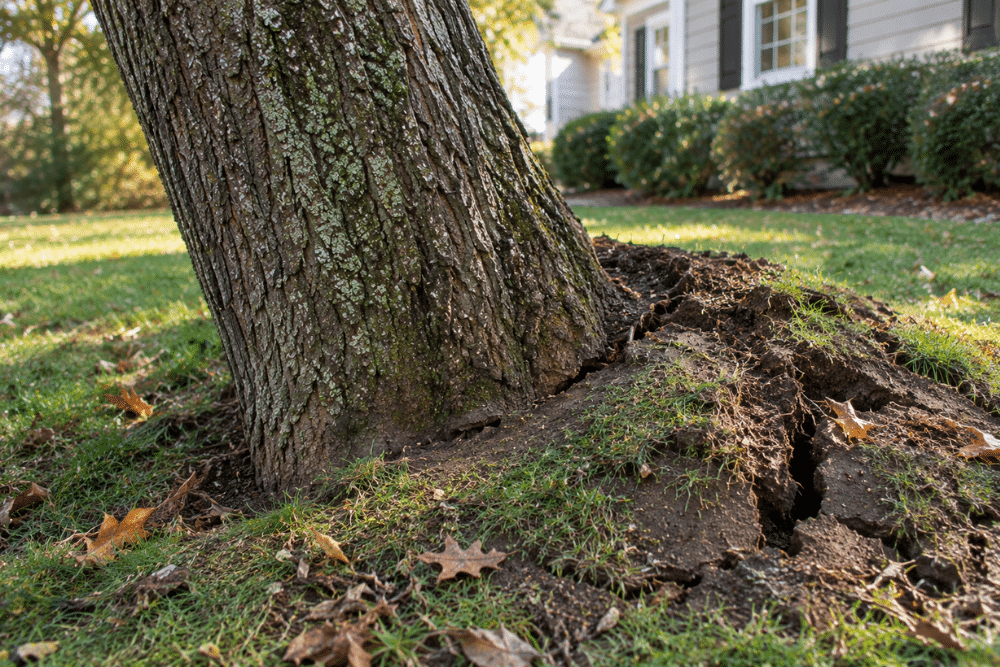
Cracked soil near a leaning tree is a sign to call an arborist today rather than wait.
What Are the Signs a Tree Needs to Be Cut Down?
The main signs are a changing lean, cracks in the trunk or soil, decay, and large dead limbs. How urgent each one is depends on how fast it’s changing and what it could hit. You can classify your tree into one of two tiers:
- Act Now: A lean that appeared suddenly or keeps getting worse; cracks or separations in the soil near the leaning tree; severe damage to the main trunk; or large dead limbs over a house, driveway, or play area. Call an arborist today and keep clear of the tree until it has been looked at. If it is on your house, on power lines, or blocking a public road, call 9-1-1.
- Act This Winter: Warning signs that have been there a while, like shallow cracks, seams, or dead branch stubs that suggest decay. Book now for the winter window.
Only an arborist on site can confirm which tier your tree actually fits, especially for large, older trees.
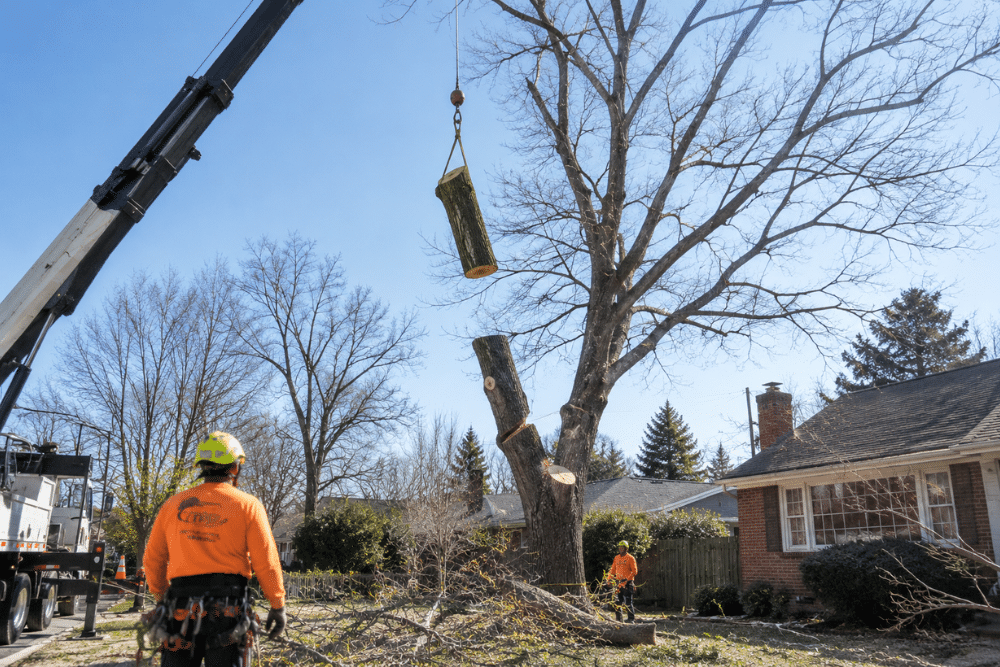
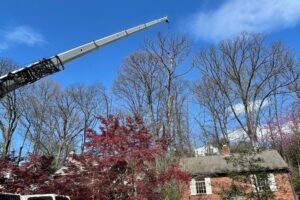
Bare branches in winter show the tree’s full structure and make the job easier to plan.
When Is the Best Time of Year to Cut Down a Tree in Northern Virginia?
Winter into early spring is a practical time to cut down a stable tree, with November through February the first choice. The cold months help in a few ways, especially for deciduous trees:
- Better Visibility: Bare branches show the tree’s structure and the full scope of the job.
- Faster Cleanup: No full canopy of leaves to clear.
- Flexible Crews: Schedules open up, so dates are easier to find.
- Firmer Footing: Firm or frozen ground helps heavy equipment, though the ground freezes on and off, not all season.
What Can Delay a Winter Removal
Wet ground, snow, and ice can delay a winter removal, so plan for a flexible date. Each affects the job in its own way:
- Saturated Ground: It makes the work harder and increases lawn damage.
- Snow and Ice: Bark and branches coated in ice are slippery and have extra weight that can make limbs snap without warning, so crews wait for it to clear.
Do You Need Approval Before Cutting Down a Tree in Great Falls or Reston?
Sometimes. Generally, Virginia lets you remove a tree on your own property, but Great Falls and unincorporated Reston both fall under Fairfax County rules for large land disturbance and protected stream buffers. Reston Association properties also need approval from the Design Review Board, which reviews exterior changes in Reston.
Fairfax County Rules
If you’re scheduling tree service in Great Falls, be sure to read the following rules first:
- Permit: Land disturbance over 2,500 square feet requires a county permit.
- Resource Protection Areas (RPAs): Removing trees or any vegetation in an RPA is prohibited without a waiver.
- HOA: Your association may have its own limits, so review the HOA tree-removal rules before you book.
Not sure if the work you want done will exceed the threshold? Fairfax County’s Land Development Services can tell you whether you need a permit.
Reston Design Review Board Approval
The Design Review Board or Reston Association staff must approve a removal before it starts, and that approval takes time. Two recent decisions show how it can go:
- A Request Can Be Put on Hold: In March 2026, the board held a 15-tree request until its next panel meeting instead of deciding on the spot.
- Safety Can Be a Reason: In August 2025, the board approved removing one front-yard tree because it could endanger people or property.
How Do You Get Your Tree on the Winter Schedule?
Request an estimate, and an arborist will visit to recommend a removal timeframe and flag which approvals to check first. They look at the tree’s structure (lean, cracks, decay, and dead wood) and the area around it so the removal can be planned safely.
Having these details ready before the visit makes that easier:
- Photos: The tree and the area around it
- HOA and Reston Status: Whether your property is in an HOA and whether it is in Reston
- RPA Check: Whether the tree is near a stream or in an RPA, using the county’s RPA map
- Nearby Hazards: Power lines, a house, a fence, or a driveway
If your tree’s changing fast, tell us as soon as possible. If you’re not sure how urgent it is, an arborist assessment gives you a clear answer before you commit to a date.
Frequently Asked Questions About Tree Removal in Northern Virginia
How long does Reston Design Review Board approval take?
A panel or full board decision is sent about one week after the meeting, and you can’t start removal until you have it in writing. Simpler requests are usually released within about three days, and panels meet three Tuesdays a month.
Can I remove a tree in a Resource Protection Area?
Yes, for a dead, diseased, dying, or invasive non-native tree, but only with county approval first. A complete vegetation removal request usually takes about five business days to review, and complex ones can take longer.
Does every leaning or damaged tree have to come down?
No. A low- to moderate-risk tree may not need removal, and an arborist may be able to reduce the risk another way. It helps to get a risk determination from a qualified Tree Risk Assessor first.
Does Fairfax County make me remove a hazardous tree on my property?
Not unless the tree threatens the public. The owner is generally responsible for a hazardous tree, but the county can only require removal when it’s a hazard to a public area.
What happens to the wood after a tree comes down?
It can be reused as firewood, mulch, or milled lumber. Ask your tree company what they do with the wood before the job starts.
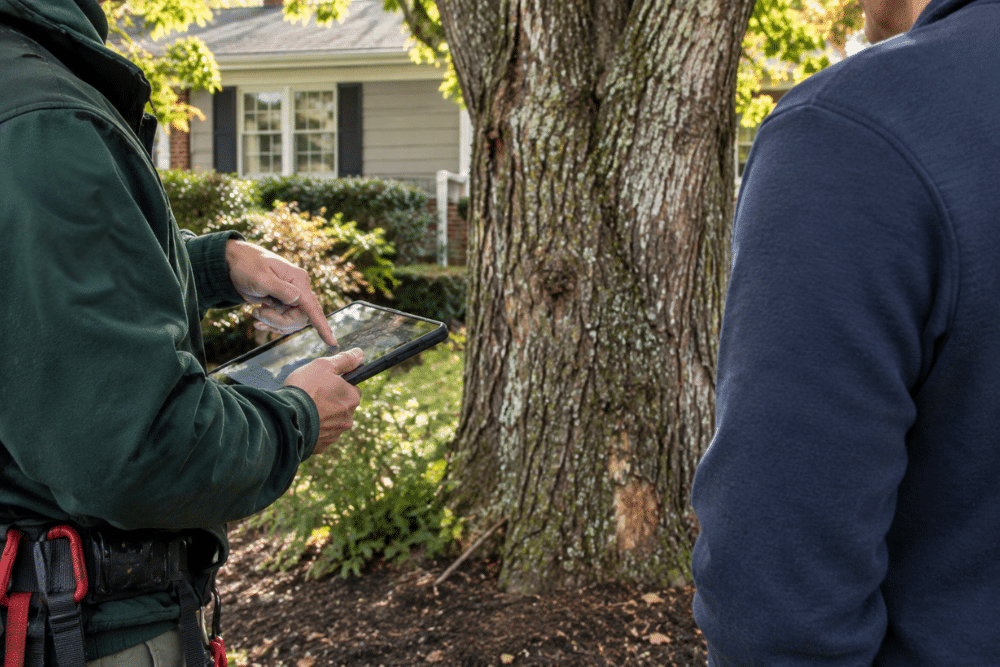
An on-site visit confirms how urgent the tree is and which approvals to check first.
Get an Estimate From Absolute Tree Before the Winter Window Opens
You shouldn’t remove a tree near a house, driveway, or power line yourself. Absolute Tree Service’s ISA Board Certified Master Arborist can tell you whether your tree needs to come down now or can wait for winter, so request an estimate for our tree removal and stump grinding services today.
For the Absolute Best Tree Service in Northern Virginia, call Absolute Tree Today!
Author Profile: Ashley Davis
Over the last 19 years, Absolute Tree has grown a reputation as one of the premier tree service companies in the Northern Virginia areas. And there’s a good reason for this—we love trees and our passion for them shows. When you call on Absolute Tree for tree service, you aren’t just getting “some guys who cut down trees.” You’re hiring highly skilled arborists who understand the growth of trees and consider tree care an art form.
Recent Articles
About Absolute Tree Service
Over the last 19 years, Absolute Tree has grown a reputation as one of the premier tree service companies in the Northern Virginia areas. And there’s a good reason for this—we love trees and our passion for them shows. When you call on Absolute Tree for tree service, you aren’t just getting “some guys who cut down trees.” You’re hiring highly skilled arborists who understand the growth of trees and consider tree care an art form.
Stay Up-to-date!
Swing in each month for new articles, pest alerts, local resources, tree care tips, tree health updates, and landscape maintenance ideas
