By the middle of summer, many Northern Virginia homeowners notice their trees don’t look as healthy as they did just a few weeks earlier. Leaves develop brown, crispy edges, the canopy begins to thin, and some leaves may even drop before fall. It’s enough to make anyone wonder: Why is my tree turning brown in summer?
In many cases, the culprit is heat and drought stress rather than a dying tree. That’s an important distinction because while summer scorch is often something a healthy tree can recover from, similar symptoms can also signal a more serious problem. Fortunately, a few simple observations can help you tell the difference and decide whether your tree needs a deep watering, continued monitoring, or an inspection from an ISA Certified Arborist.
Key Takeaways
- Some summer browning is normal, since heat and dry spells scorch leaf edges without killing the tree.
- Browning that starts at the leaf tips and edges usually points to water stress, while sudden, whole-canopy browning is more concerning.
- Simple checks, including a twig-snap test, soil moisture near the dripline, and how much of the canopy is affected, help you tell stress from decline.
- Northern Virginia’s mature oaks, tulip poplars, and hickories are especially prone to showing signs of summer scorch, particularly on large estate lots.
- When browning is widespread, spreading fast, or you can’t pin down the cause, an arborist assessment is the best next step.
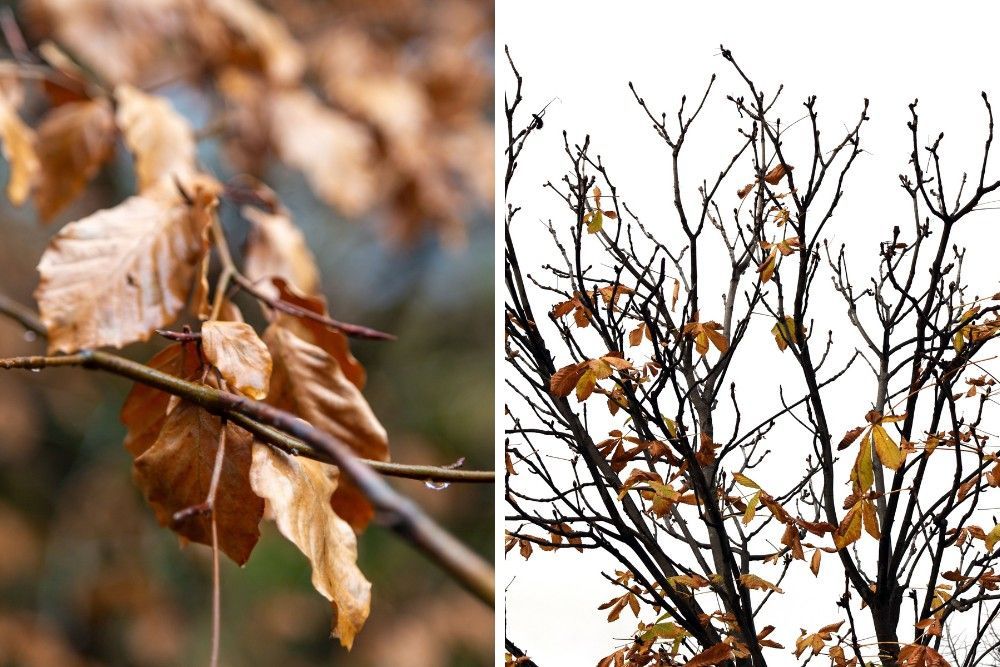
Summer leaf scorch usually starts at the leaf tips and edges, and older interior leaves are often the first to yellow and drop.
Why Do Tree Leaves Turn Brown in Summer?
Brown, crispy leaf edges in the middle of summer usually mean heat and drought stress, also referred to as leaf scorch, not a dying tree. It’s a non-infectious, environmental condition that, by itself, isn’t enough to kill an otherwise healthy plant.
When soil is dry and temperatures climb, a tree can’t pull enough water out to the edges of its leaves, so the margins brown and crisp first because they are last in line for whatever moisture the tree can move. Leaf scorch is rarely fatal on its own, and healthy trees often recover by producing a full canopy again the following growing season.
Typical summer scorch tends to look like:
- Browning that starts at the leaf tips and outer edges, not the center
- Older, interior leaves yellowing and dropping before the newer outer ones
- Damage that shows up gradually over a dry stretch rather than overnight
Some leaf drop during a hot, dry spell is normal as well, since the tree sheds whatever it can’t support. Where the browning shows up and how much of the tree is covered are the real clues to whether you’re seeing normal heat stress or a more serious problem.
What a Northern Virginia Summer Does to Mature Trees
Our native hardwoods are built for this climate, but a hot and dry Northern Virginia summer still pushes big, mature trees to their limits. The species of estate canopies across McLean and Great Falls—such as numerous oaks, tulip poplar, hickory, red maple, and American beech—are the ones that show visible scorch when the weather turns punishing.
Estate trees on large wooded lots often show it most dramatically:
- The south- and west-facing sides go first, taking the brunt of afternoon sun.
- Trees near driveways, stone walls, and pavement absorb reflected heat that raises the stress load.
- The largest, oldest specimens have the most canopy to keep supplied, so they feel a water deficit sooner.
While some browning and leaf scorch are expected during hot, dry summers, mature trees don’t all respond the same way. Factors like species, soil conditions, sun exposure, and the tree’s overall health all influence how well it tolerates drought. That’s why one tree may recover with little more than a deep watering while another shows signs of more serious decline.
Is Your Tree Stressed or Dying?
The difference depends on how much of the tree is affected, how quickly it happened, and whether the wood beneath is still alive. There are three quick checks that tell you most of what you need to know.
Perform the Twig-Snap Test
Grab and bend a pencil-sized twig and see how it responds:
- Supple, and green just under the bark when scratched, means that limb is alive
- Snaps dry and is brown all the way through means that limb may be dead
Check the Soil
The leaves react to what’s happening at the roots, so be sure to check there as well:
- Dig down 6 to 9 inches near the dripline, the edge of the canopy
- Cool and moist means the tree doesn’t need water; bone-dry means it needs a deep soak, covered below
Read the Canopy Pattern
Look at the tree as a whole instead of focusing on a single branch:
- A few older, interior leaves browning is low concern
- Large sections browning at once, or a rapid drop across the whole canopy, is a sign to call an arborist
Brown leaf edges alone rarely tell the whole story. It’s the combination of widespread canopy decline, dead wood, and worsening symptoms that signals it’s time for a professional evaluation.
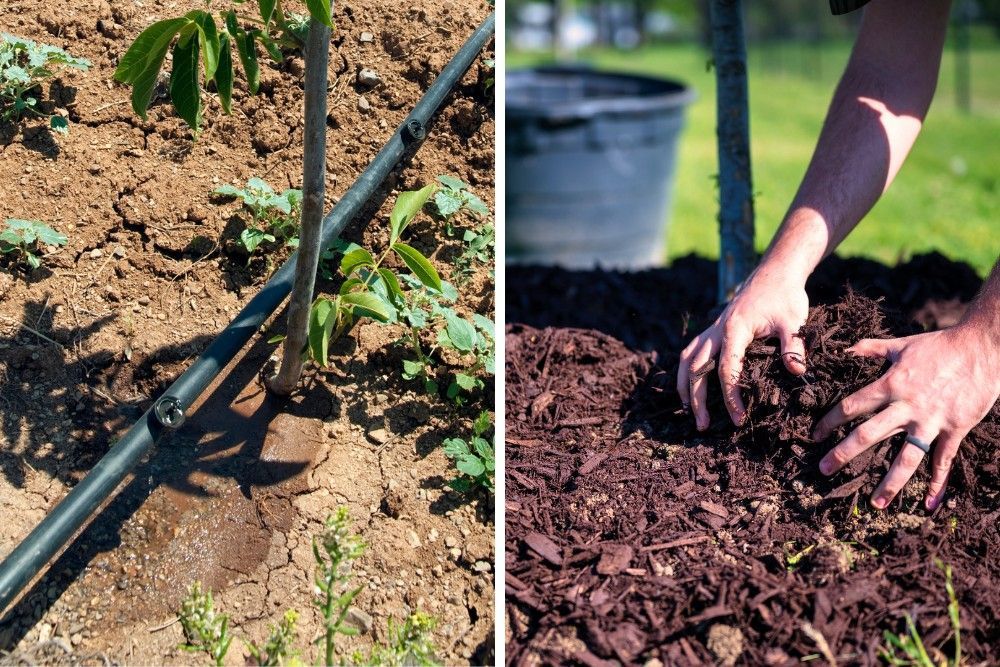
One of the best ways to help a heat-stressed tree recover is by watering deeply and applying a 2- to 4-inch layer of mulch around the root zone, leaving a few inches of space around the trunk.
What Should I Do If My Tree Has Brown Leaves from Heat Stress?
If your tree is showing signs of heat and drought stress, the goal is to reduce additional stress while giving the roots the best chance to recover. A few simple steps can help support your tree through the rest of the summer, while others can unintentionally make the problem worse.
What to Do for a Stressed Tree
The majority of what a stressed tree needs revolves around water and mulch:
- Deep-soak slowly under the dripline once or twice a week, aiming for roughly an inch of water a week as a starting point, rather than frequent shallow sprinkles.
- Keep water off the trunk and let it reach the roots at the canopy edge.
- Maintain a two- to four-inch mulch ring under the canopy, pulled back a few inches from the trunk.
What to Avoid During Heat and Drought
Some common and good-natured moves can actually do more harm than good in hot, dry weather:
- Don’t fertilize because it pushes new growth the tree can’t currently support.
- Don’t perform heavy pruning, since removing live canopy adds stress; save structural pruning for the dormant season.
- Don’t guess at a pest or disease and start treating it; a wrong guess wastes time and money, and some serious problems look just like ordinary scorch.
That last point is quite important because some serious conditions closely mirror simple heat scorch. For example, bacterial leaf scorch shows a narrow yellow band between the brown, dead leaf edge and the green, living tissues—a detail usually missing from plain drought stress.
A Certified Arborist can assess your tree as a whole, identify the underlying cause of the browning, and recommend the most appropriate next steps.
Frequently Asked Questions About Tree Leaves Turning Brown
How long does it take a tree to recover from summer leaf scorch?
Recovery usually shows up in the next growing season, not the same summer. The scorched leaves themselves won’t turn green again, but a healthy tree pushes out fresh foliage the following spring. Judge the tree’s health then rather than in the heat of August.
Should I pull the brown or scorched leaves off the tree?
There’s no need, and it’s better not to. A stressed tree drops what it can’t support on its own, and stripping leaves by hand only adds stress and removes tissue that’s still doing a little work.
Are young or newly planted trees more likely to brown in summer?
Yes. Trees planted in the last year or two have small, shallow root systems that dry out fast, so they scorch more easily than established trees. Plan on watering them more closely through their first few summers.
Can overwatering also turn tree leaves brown?
Yes. Too much water in soggy or poorly drained soil suffocates roots and can brown or yellow leaves much like drought does. That’s why it helps to check soil moisture before watering, since the fix for dry soil is the opposite of the fix for wet soil.
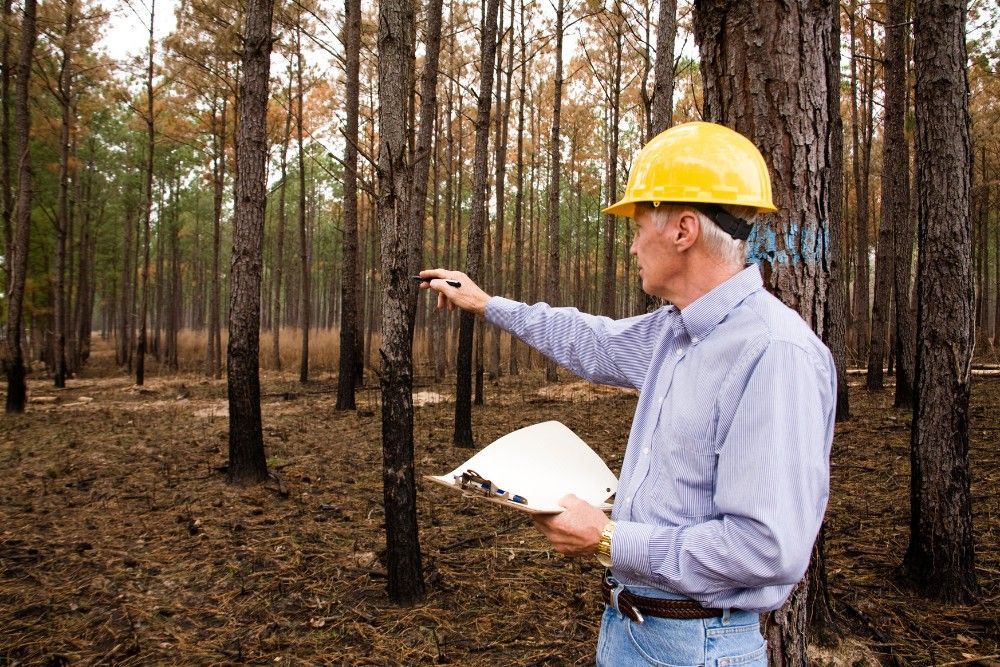
When browning is widespread or the cause isn’t clear, a Certified Arborist can tell ordinary heat stress from genuine decline.
Absolute Tree Can Diagnose Your Tree’s Brown Leaves
Brown leaves don’t always mean a tree is dying, but they do mean it’s under stress—and determining the cause is the first step toward protecting it.At Absolute Tree, our ISA Certified Arborists evaluate the entire tree, from the canopy to the root zone, to determine whether you’re dealing with ordinary heat stress or a more serious issue.
If you’re concerned about a mature tree on your Northern Virginia property, request an estimate or call Absolute Tree at 703-705-4560 today and we’ll recommend the best path forward.
For the Absolute Best Tree Service in Northern Virginia, call Absolute Tree Today!
Author Profile: Ashley Davis
Over the last 19 years, Absolute Tree has grown a reputation as one of the premier tree service companies in the Northern Virginia areas. And there’s a good reason for this—we love trees and our passion for them shows. When you call on Absolute Tree for tree service, you aren’t just getting “some guys who cut down trees.” You’re hiring highly skilled arborists who understand the growth of trees and consider tree care an art form.
Recent Articles
About Absolute Tree Service
Over the last 19 years, Absolute Tree has grown a reputation as one of the premier tree service companies in the Northern Virginia areas. And there’s a good reason for this—we love trees and our passion for them shows. When you call on Absolute Tree for tree service, you aren’t just getting “some guys who cut down trees.” You’re hiring highly skilled arborists who understand the growth of trees and consider tree care an art form.
Stay Up-to-date!
Swing in each month for new articles, pest alerts, local resources, tree care tips, tree health updates, and landscape maintenance ideas

