Fairfax County alone has an estimated 44.4 million trees covering more than half the county. Many of them are in residential yards – and most homeowners don’t know what they are.
That matters because different species come with different risks, maintenance needs, and lifespans. Here are the eight you’re most likely to have in your yard and how to identify them.
Key Takeaways
- Northern Virginia yards are dominated by eight species: white oak, red oak, red maple, tulip poplar, American beech, sweetgum, Virginia pine, and flowering dogwood.
- Leaf shape, bark texture, and what a tree drops (acorns, samaras, gumballs) are the fastest ways to tell them apart.
- Some of these species – especially tulip poplars, red maples, and Virginia pines – are structurally prone to failure and worth keeping an eye on.
- Each species has different pruning windows, with oaks requiring extra caution during the growing season due to disease risk.
What Are the Most Common Trees in Northern Virginia?
If you’re trying to figure out what’s growing in your yard, you don’t need to overthink it. Most trees can be identified by a few simple clues, such as leaf shape, bark texture, and what ends up on the ground.
These are the species you’re most likely to see in yards across Great Falls, Springfield, Arlington, and beyond.
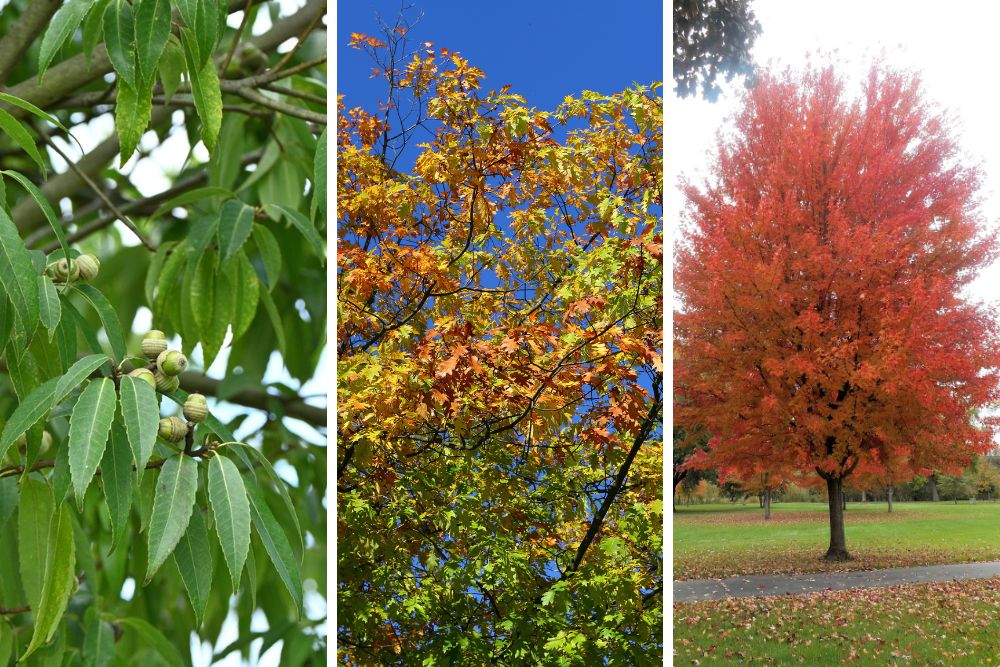
White oak (left), northern red oak (center), and red maple (right) are three of the most common shade trees found in Northern Virginia yards.
1. White Oak
White oaks are among the most valuable trees on any Northern Virginia property. Found throughout Great Falls and McLean estates, mature white oaks are long-lived shade trees that anchor entire landscapes.
How to Identify White Oak
- Leaves: Arranged alternately with 7-10 rounded lobes and no bristle tips; blue-green in summer and turning burgundy-red in fall
- Bark: Light gray, developing loose, flaky plates that give mature trees a slightly shaggy look
- Size: Typically grows 60-80 feet tall with a broad, spreading canopy
- What It Drops: Acorns with shallow, warty caps that are highly attractive to wildlife
- Care Considerations: Large canopies tend to accumulate deadwood over time, so periodic pruning helps maintain structure. Avoid pruning during the growing season, when the tree is more vulnerable to stress and disease.
2. Northern Red Oak
Northern red oaks grow fast by oak standards and are common in both suburban yards and wooded lots across Northern Virginia. Their deep, rich red color during fall is some of the best in the region.
How to Identify Northern Red Oak
- Leaves: Alternately arranged with 7-11 pointed lobes and bristle tips; rich red color in the fall
- Bark: Dark gray-brown with broad, flat ridges that resemble ski tracks running down the trunk
- Size: Typically grows 60-75 feet tall with a rounded canopy
- What It Drops: Acorns with a flat, saucer-shaped cap; acorns are bitter and less appealing to wildlife
- Care Considerations: Red oak has strong wood, but large branches can fail in storms if deadwood isn’t managed. Avoid pruning during the growing season to reduce stress and the risk of oak decline.
3. Red Maple
Red maples are everywhere; they’re the most commonly planted street tree in Northern Virginia. They’re popular for good reason, as they are fast-growing, adaptable to almost any soil, and one of the most reliable sources of fall color in Northern Virginia.
How to Identify Red Maple
- Leaves: Opposite arrangement (a key trait that separates maples from oaks), with 3-5 lobes and V-shaped notches
- Bark: Smooth and gray when young, developing darker, platy ridges as the tree matures
- Size: Typically grows 40-60 feet tall with an oval to rounded canopy
- What It Drops: Red flowers in early spring before leaves emerge, followed by paired winged seeds (samaras) and bright red fall foliage
- Care Considerations: Red maple has relatively weak wood and is prone to storm breakage, especially with codominant stems. Structural pruning when young helps reduce this risk.
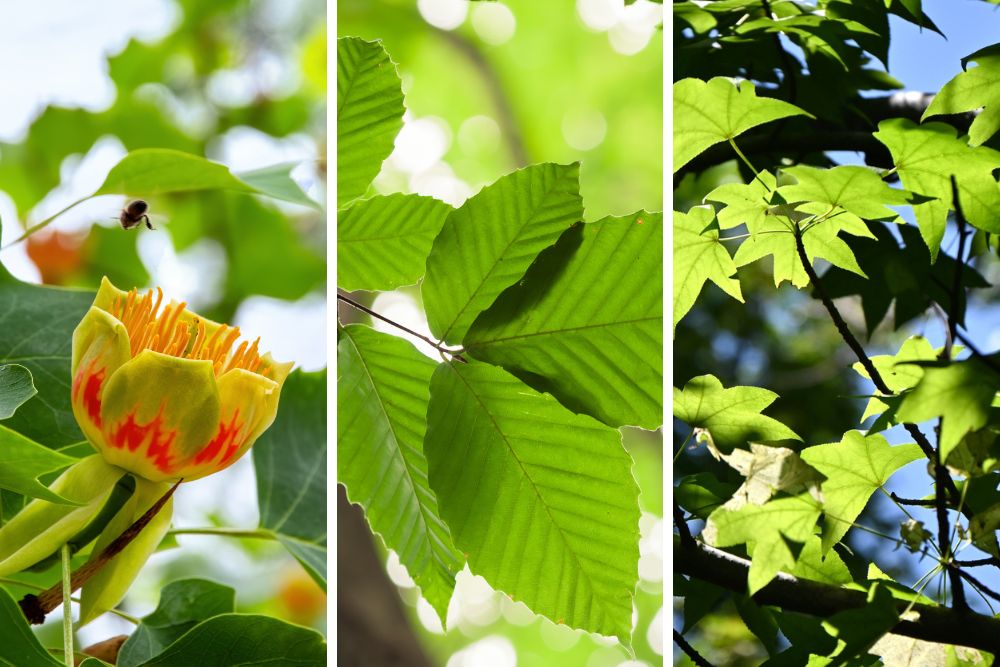
Tulip poplar’s distinctive tulip-shaped flower (left), American beech’s parallel-veined leaves (center), and sweetgum’s star-shaped foliage (right) make these three native hardwoods easy to identify once you know what to look for.
4. Tulip Poplar
Tulip poplars are fast-growing trees that tower over everything else on the property. They’re technically not poplars at all but members of the magnolia family.
How to Identify Tulip Poplar
- Leaves: Alternately arranged with a distinctive four-lobed shape that resembles a tulip – flat or notched at the top
- Bark: Smooth and greenish when young, developing deep, diamond-patterned furrows as the tree matures
- Size: Typically grows 70-100+ feet tall with a tall, straight trunk, making it one of the tallest hardwoods in eastern North America
- What It Drops: Tulip-shaped yellow-green flowers in late spring and cone-like seed clusters in the fall
- Care Considerations: Tulip poplar has brittle wood, making mature trees prone to limb drop during storms. It’s one of the more common species requiring removal near homes or structures.
5. American Beech
American beeches are the trees that refuse to let go of fall, as their dry, papery leaves cling to branches well into winter, rustling in the wind long after every other hardwood has gone bare.
How to Identify American Beech
- Leaves: Alternately arranged, simple and elliptical with prominent parallel veins and toothed edges; often remain on the tree through winter as dry, papery brown leaves
- Bark: Smooth and light gray, often compared to elephant skin; it does not develop the ridges or furrows seen on oaks or maples
- Size: Typically grows 50-70 feet tall with a broad, spreading canopy and low branches
- What It Drops: Small, triangular beechnuts enclosed in spiny husks in the fall
- Care Considerations: Shallow roots make American beech sensitive to soil compaction and construction damage. Beech leaf disease is an emerging threat – watch for dark banding on leaves.
6. Sweetgum
Sweetgums are one of the few native hardwoods that rival maples for fall color, producing leaves in shades of yellow, orange, red, and purple, sometimes all on the same tree. They’re a fixture of suburban neighborhoods throughout Northern Virginia.
How to Identify Sweetgum
- Leaves: Alternately arranged with a star-shaped form and 5-7 pointed lobes; often confused with maple, but the alternate leaf pattern is the key difference
- Bark: Deeply furrowed with narrow, scaly ridges on mature trees; younger branches sometimes develop corky wings
- Size: Typically grows 60-80 feet tall with a pyramidal to oval canopy
- What It Drops: Round, spiky seed balls (gumballs), unmistakable and notorious for littering yards through fall and winter
- Care Considerations: Aggressive surface roots can damage sidewalks, driveways, and foundations. Combined with the constant drop of gumballs, sweetgums are common removal candidates.
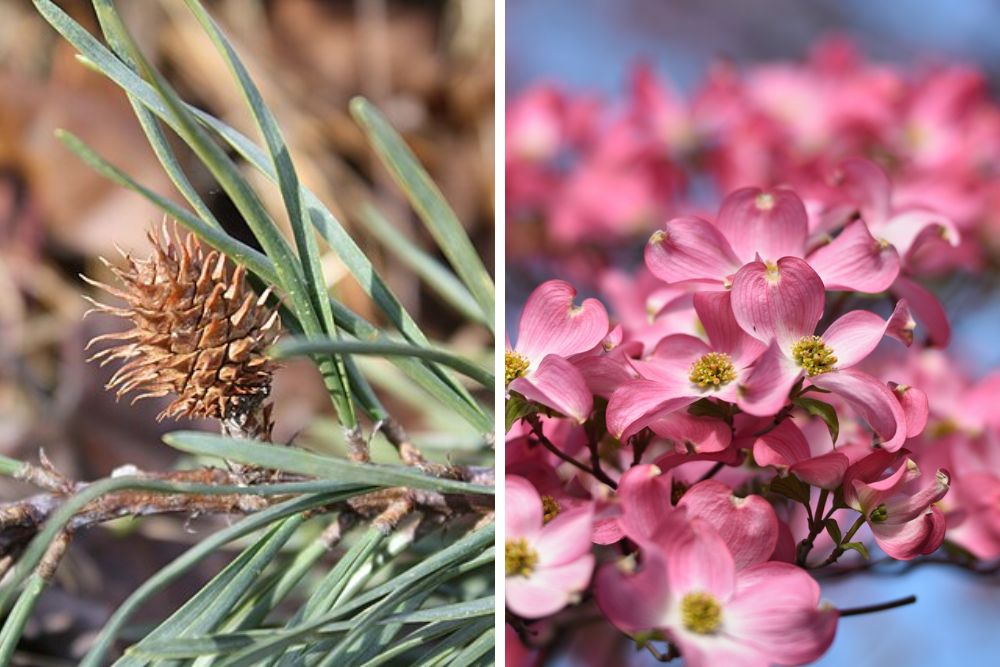
Virginia pine’s small, prickly cones and short paired needles (left) contrast with the showy pink bracts of a flowering dogwood, Virginia’s state tree (right).
7. Virginia Pine
Virginia pines are the short-lived colonizers of Northern Virginia. They are fast to fill in abandoned farmland and cleared lots, but among the first trees to decline on established properties. If you have a pine that looks like it’s seen better days, this is probably the one.
How to Identify Virginia Pine
- Leaves: Short, twisted needles in bundles of two; most other pines in the area have three or five needles per bundle
- Bark: Orange-brown and platy, breaking into thin, irregular scales
- Size: Typically grows 30-50 feet tall with an irregular, often lopsided canopy
- What It Drops: Small, oval cones with prickly scales that persist on the tree for years
- Care Considerations: A relatively short-lived tree (65-90 years) and prone to pine bark beetles. On established properties, Virginia pines are often declining or already dead, making them a common removal candidate.
8. Flowering Dogwood
Virginia’s state tree and state flower, the flowering dogwood is a beloved small tree found in yards across Northern Virginia, and one of the first to put on a show each spring.
How to Identify Flowering Dogwood
- Leaves: Opposite arrangement with simple, oval leaves; smooth edges and veins that curve toward the tip
- Bark: Distinctive blocky pattern often described as “alligator skin,” especially on mature trees
- Size: Typically grows 15-30 feet tall as a small understory tree with a layered, horizontal branching structure
- What It Drops: White (or pink) flower-like bracts in spring, followed by clusters of bright red berries in the fall
- Care Considerations: Prune shortly after blooming in spring, rather than in winter like most trees, to preserve next year’s flowers. Dogwoods are also susceptible to anthracnose, so watch for leaf spots and twig dieback.
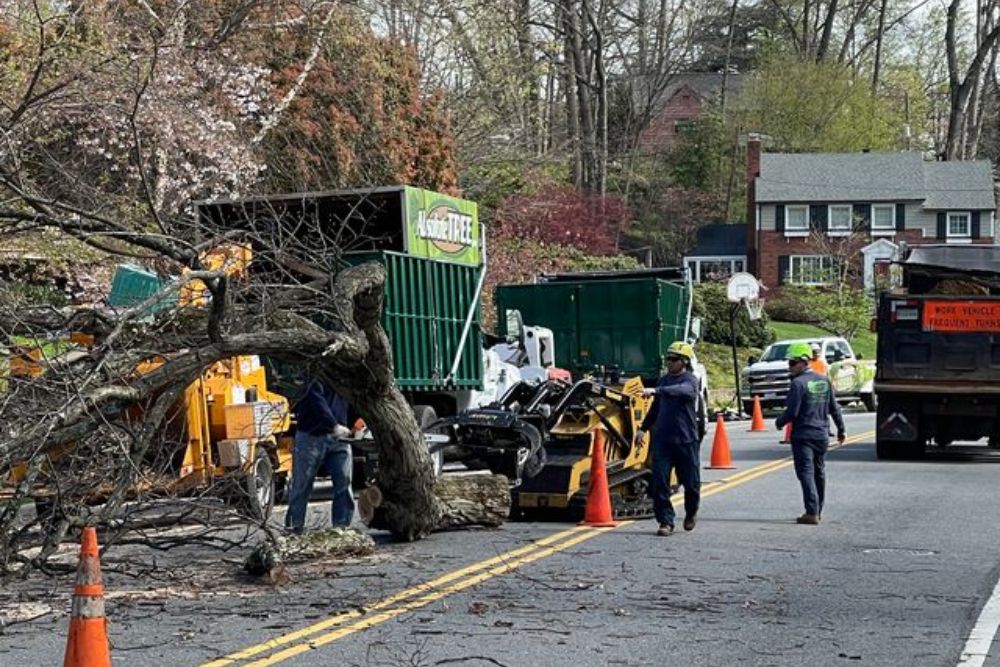
Absolute Tree’s crew clears a fallen tree from a Northern Virginia neighborhood, the kind of storm response that often reveals which species on a property were most at risk.
Frequently Asked Questions About Common Trees in Virginia
What’s the easiest way to identify a tree in my yard?
The easiest way to identify a tree in your yard is to start with the leaves. Look at how they’re arranged (opposite vs. alternate), their shape, and any unique features like lobes or needle clusters. From there, check the bark and what the tree drops – acorns, seed pods, or flowers – to narrow it down.
Why does it matter what kind of tree I have?
It’s important to know what kind of tree you have because different species come with different risks and maintenance needs. Some are more prone to storm damage, others attract specific pests, and some require very specific pruning timing. Knowing what you have helps you make better decisions about care and safety.
Are there other resources to help identify trees?
The free Tree app from Virginia Tech lets you narrow down species based on your GPS location and questions about leaf shape, bark, and fruit. Fairfax County also has online tree identification resources worth bookmarking.
What trees are most likely to cause problems on a property?
It depends on the situation, but fast-growing trees with weaker wood, like red maple or tulip poplar, are more prone to storm damage. Others, like sweetgum, create ongoing maintenance issues with surface roots and debris.
Now That You Know Your Trees, Get Expert Help Caring for Them
Now that you can put a name to the trees on your property, you’ll start noticing things you didn’t before: deadwood accumulating in that oak canopy, a tulip poplar leaning toward the house, a Virginia pine that hasn’t looked right in years. Every species on this list has different strengths, different vulnerabilities, and different timelines for when problems become emergencies.
If something doesn’t look right, Absolute Tree’s certified arborists can tell you exactly what’s going on and what to do about it. Schedule an arborist assessment by calling 703-969-6207 or requesting an estimate online.
For the Absolute Best Tree Service in Northern Virginia, call Absolute Tree Today!
Author Profile: Ashley Davis
Over the last 19 years, Absolute Tree has grown a reputation as one of the premier tree service companies in the Northern Virginia areas. And there’s a good reason for this—we love trees and our passion for them shows. When you call on Absolute Tree for tree service, you aren’t just getting “some guys who cut down trees.” You’re hiring highly skilled arborists who understand the growth of trees and consider tree care an art form.
Recent Articles
About Absolute Tree Service
Over the last 19 years, Absolute Tree has grown a reputation as one of the premier tree service companies in the Northern Virginia areas. And there’s a good reason for this—we love trees and our passion for them shows. When you call on Absolute Tree for tree service, you aren’t just getting “some guys who cut down trees.” You’re hiring highly skilled arborists who understand the growth of trees and consider tree care an art form.
Stay Up-to-date!
Swing in each month for new articles, pest alerts, local resources, tree care tips, tree health updates, and landscape maintenance ideas


