In July 2024, a 100-year-old oak in Washington DC’s Garfield Park dropped a huge limb without any warning and a woman walking beneath it was killed. Not long after, local officials began investigating summer branch drop syndrome as the cause. The worst part—it didn’t happen in a freak weather event; it was a hot, calm summer day that’s typical in Northern Virginia June through August.
The risk level of dead branches varies from species to species. Lower deadwood in a tulip poplar is common and could be a sign of a potential beetle infestation in a Virginia pine, or the initial sign of a systemic root problem in a red maple. In Fairfax and Arlington counties, you’re probably faced with one of four species, and deadwood means something different on each.
Key Takeaways
- Dead branches don’t always mean a dying tree, but they always mean something—and the urgency depends on which species you have.
- Summer branch drop on oaks can happen on calm, sunny days with no storm warning whatsoever.
- Tulip poplars shed lower branches naturally, but deadwood higher in the canopy is a red flag.
- Red maples with dieback spreading from the top down may have a systemic root or vascular problem that goes beyond pruning.
- Virginia pine never sheds branches naturally—any dead branch is a sign of real decline.
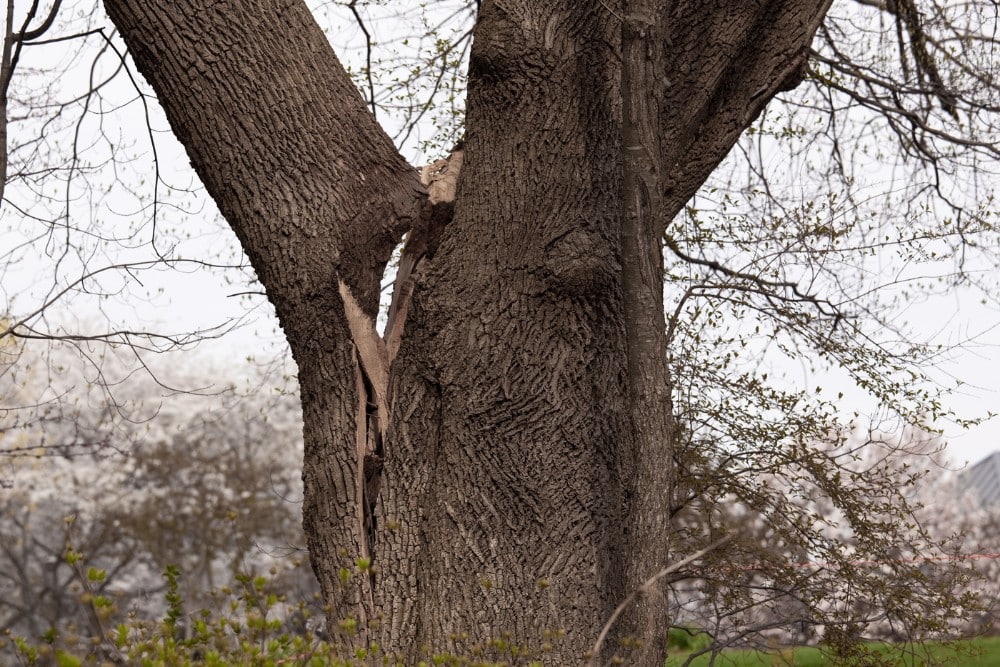
A split crotch like this one is a structural failure waiting to happen. It’s the kind of hazard that’s easy to miss from the ground but obvious to a trained arborist.
Why Dead Branches Shouldn’t Be Ignored
Dead branches don’t become safer with time. Once a branch dies, it stops receiving water and gradually becomes dry, brittle, and more likely to break. Unlike healthy branches, deadwood can’t flex under stress, making it much more prone to failure.
Dead branches are especially concerning when they:
- Hang over a home, driveway, sidewalk, or play area.
- Are large enough to cause injury or property damage.
- Are located high in the canopy, where they’re difficult to inspect from the ground.
- Appear alongside other signs of decline, such as trunk decay, fungal growth, or canopy dieback.
The International Society of Arboriculture (ISA) considers large dead branches one of the most important warning signs during a tree risk assessment because they can fail unexpectedly. If you notice significant deadwood in your tree, it’s worth having an ISA Certified Arborist determine whether it’s an isolated issue or a sign of a larger health or structural problem.
Are Dead Branches on Your Tulip Poplar Normal or a Warning Sign?
Tulip poplar is the tree homeowners in Northern Virginia most frequently ask about, and the confusion is understandable because this species naturally drops branches.
Lower Canopy Shedding vs. Upper Canopy Dieback
Tulip poplars practice cladoptosis, which is the natural shedding of lower limbs as the tree gets taller and those branches lose sunlight. If you’re finding small to mid-size branches dropping from the bottom third of your tree, that’s normal. The bark on dead tulip poplar branches peels away in long, paper-like strips, which is an easy visual identifier.
Upper canopy dieback, however, is a different story. Dead branches in the top of a tulip poplar canopy usually signal:
- Drought stress
- Root damage
- Structural problems the tree can’t self-correct
Northern Virginia summers are exactly the conditions that speed up upper limb dieback. When the decline is above where you can see it easily, an arborist needs to determine whether you’ve got a stressed but manageable tree, or one that’s starting to fall from the top down.
Why Tulip Poplar Deadwood Is Particularly Dangerous
Typical landscape tulip poplars can reach 80 to 120 feet at maturity. When a large limb goes, it carries tremendous momentum and weight.
Improper cuts on a tree this size leave wounds that accelerate wood rot and create new structural vulnerabilities. Tulip poplars are especially prevalent on wooded lots, where 50- and 60-year-old specimens have reached full size and weight, such as in:
Why Do Dead Branches on Oaks Deserve Extra Attention?
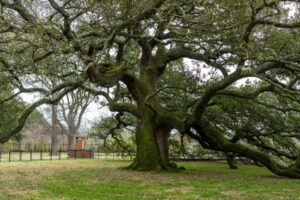
Dead branches are a concern on any tree, but they’re especially important to address on mature oaks. Unlike some species that naturally shed deadwood, oaks often retain dead branches for years. As those branches dry out and decay, they remain suspended in the canopy until they eventually fail.
That’s why deadwood in an oak shouldn’t be ignored, especially if it’s hanging over a home, driveway, sidewalk, or other frequently used area. Removing dead branches before they fail is one of the simplest ways to reduce risk.
Oaks Can Also Drop Healthy Branches
Mature oaks are also known for a phenomenon called summer branch drop, or sudden limb failure. In these cases, a large, apparently healthy branch breaks on a hot, calm day without the high winds homeowners typically associate with tree failures. While the exact cause isn’t fully understood, drought stress, high humidity, and rapid changes in moisture are all believed to contribute.
Summer branch drop is different from deadwood failure, but it reinforces the same point: if a mature oak has dead branches, previous limb failures, or other signs of structural decline, it’s worth having an ISA Certified Arborist evaluate the tree before another branch comes down.
When Do Dead Branches on a Red Maple Signal a Bigger Problem?
A few dead branches on an older red maple aren’t unusual. As these trees mature, it’s normal for some interior or lower limbs to decline from age and canopy shading. The concern is when deadwood is accompanied by other signs that the tree’s root system or vascular system is failing.
Warning Signs of a Declining Red Maple
Dead branches are more likely to indicate a serious problem when you also notice:
- Deadwood scattered throughout the canopy, rather than isolated to one area.
- Dieback starting at the top of the tree and progressing downward.
- Early fall color or leaves with brown, scorched edges during summer.
- No visible root flare, which can indicate girdling roots.
- Progressive decline from year to year instead of a one-time branch loss.
These symptoms are often associated with issues such as girdling roots, drought stress, or vascular diseases like verticillium wilt and anthracnose. While pruning can remove dead branches, it won’t stop the underlying decline if the root system or vascular tissue has been compromised.
Because many red maples planted throughout Northern Virginia in the 1970s through the 1990s are now reaching the later stages of their landscape life, it’s worth having an ISA Certified Arborist evaluate a mature tree showing multiple warning signs before the problem becomes irreversible.
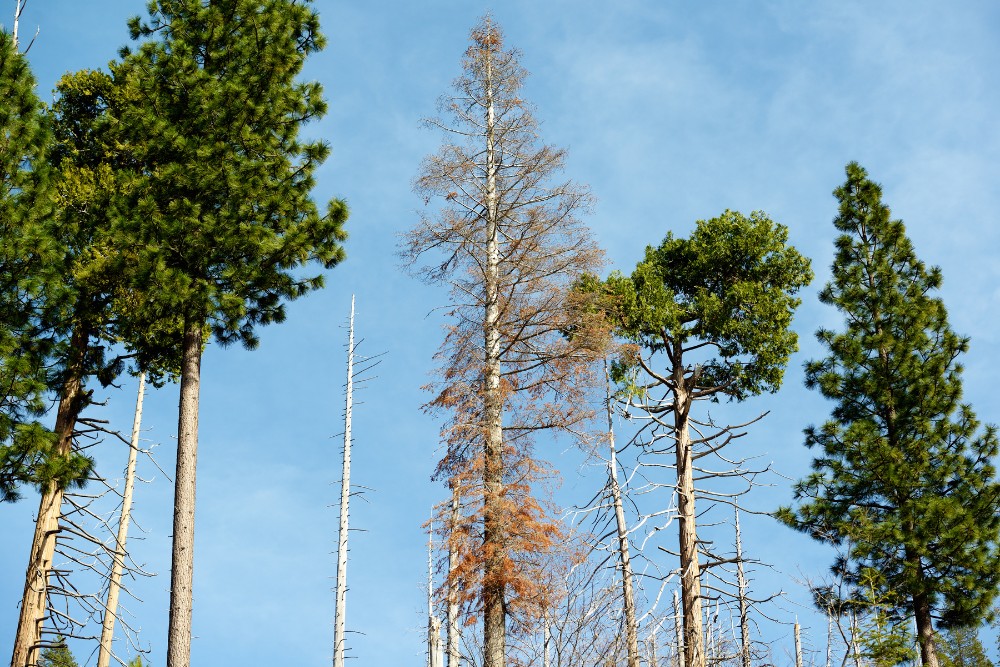
When one pine starts to decline, neighboring trees are often next. Dead branches on Virginia pine are never normal—they always signal a problem that needs attention.
Why Is Any Dead Branch on a Virginia Pine a Concern?
Unlike many other pines, Virginia pines don’t naturally shed healthy lower branches as they mature. When branches begin dying, it’s usually a sign that the tree is under stress rather than part of its normal growth.
What Dead Branches Can Mean
Dead branches on a Virginia pine are commonly associated with:
- Drought stress
- Pine bark beetles (Ips species)
- Tip moth damage
- Root damage
- Over-shading from surrounding trees that have grown in around it
Once branch death starts moving toward the upper crown, the prognosis becomes much worse. With Virginia pine, you can’t simply wait and see. When it looks bad, the decline is typically well along.
Why You Shouldn’t Wait
Stressed Virginia pines are more susceptible to pine bark beetle infestations, and those beetles can spread to nearby pines before the original tree’s decline is obvious. What starts as a few dead branches on one tree can quickly become a problem for multiple trees on the property. If you notice dead branches on a Virginia pine, have it evaluated before summer heat adds even more stress.
Frequently Asked Questions About Dead Branches on Trees
Are dead branches on a tree dangerous?
Yes. Dead branches lose moisture, become brittle, and can fail without warning, even on calm days with no wind or rain. The risk depends on:
- The size of the branch
- What’s below it
- Which species the tree is
A large dead branch over a driveway or children’s play area is an urgent situation, regardless of the weather forecast.
What causes dead branches on oak trees?
Dead oak branches are commonly caused by:
- Drought stress
- Root damage
- Disease
- The natural decline of older limbs
Oaks don’t shed dead branches naturally; they stay in the canopy until they fail under load, which makes deadwood removal more urgent on oaks than on most other species.
What is summer branch drop syndrome?
Summer branch drop is when a large, apparently healthy branch breaks off on a calm, hot summer day (without any storm). It happens most frequently on mature trees with long horizontal limbs, typically June through August, and can affect branches that show no outward signs of distress.
Should I remove dead branches from my tree?
Yes. Dead branches don’t heal or recover; they gradually become more brittle and more dangerous. Deadwood pruning is appropriate at any time of year and shouldn’t wait until winter. The sooner a dead branch comes down, the lower the risk to whatever’s below it.
Why does my tulip poplar drop branches in summer?
Lower-branch shedding on tulip poplars can be a natural process. Branches dropping from the upper canopy are a different situation and usually indicate drought stress or structural problems. If your tulip poplar is losing branches from high in the canopy, have an arborist assess whether the decline is isolated or worsening.
When should I call an arborist about dead branches in my tree?
Call right away if dead branches hang over a:
- Structure
- Patio
- Play area
- Driveway
Also call if the dieback is spreading, if your tree has dropped a limb before, or if multiple branches in different parts of the canopy are affected. When in doubt, sooner is always better when considering a tree assessment.
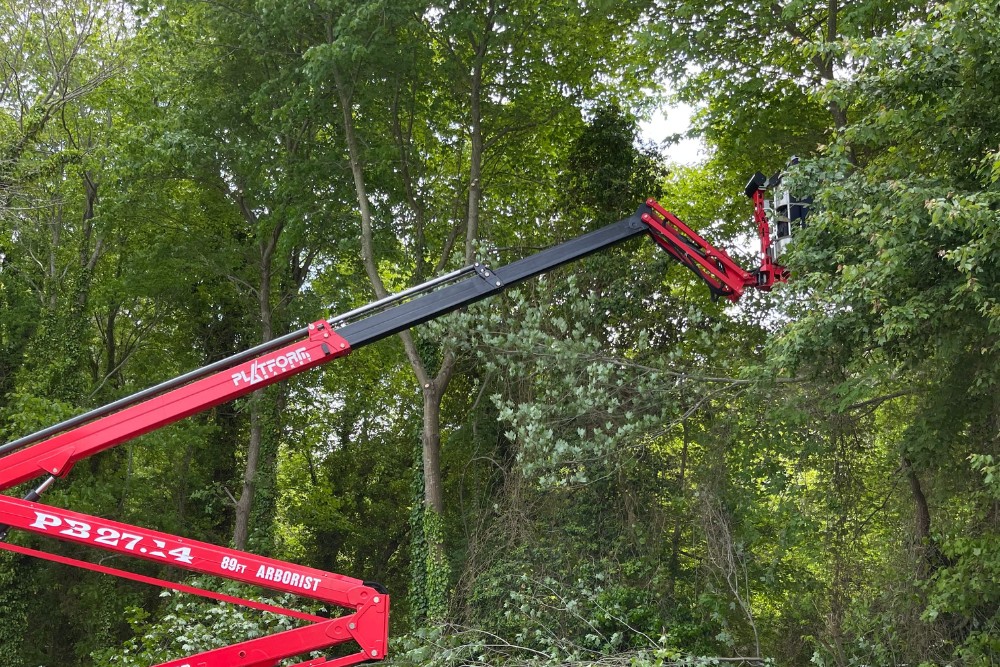
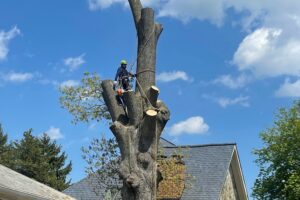
Removing dead branches from tall trees requires specialized equipment—not a ladder and a handsaw. Absolute Tree uses a spider lift to safely reach deadwood high in the canopy.
Listen to What Dead Branches Are Telling You and Call Absolute Tree Service
If you see deadwood and aren’t sure what to do, an arborist assessment is the right first step. If a branch is already hanging over something valuable, we offer professional deadwood pruning and 24/7 emergency tree service for situations that can’t wait.
Call us today at 703-969-6207 or contact us to get started!
For the Absolute Best Tree Service in Northern Virginia, call Absolute Tree Today!
Author Profile: Ashley Davis
Over the last 19 years, Absolute Tree has grown a reputation as one of the premier tree service companies in the Northern Virginia areas. And there’s a good reason for this—we love trees and our passion for them shows. When you call on Absolute Tree for tree service, you aren’t just getting “some guys who cut down trees.” You’re hiring highly skilled arborists who understand the growth of trees and consider tree care an art form.
Recent Articles
About Absolute Tree Service
Over the last 19 years, Absolute Tree has grown a reputation as one of the premier tree service companies in the Northern Virginia areas. And there’s a good reason for this—we love trees and our passion for them shows. When you call on Absolute Tree for tree service, you aren’t just getting “some guys who cut down trees.” You’re hiring highly skilled arborists who understand the growth of trees and consider tree care an art form.
Stay Up-to-date!
Swing in each month for new articles, pest alerts, local resources, tree care tips, tree health updates, and landscape maintenance ideas

