If you’ve been startled awake by what sounds like a gunshot coming from your yard on a frigid Northern Virginia night, you’re not alone. Homeowners across Alexandria, Arlington, and Fairfax are hearing these mysterious sounds as winter temperatures plunge and mature trees respond to dramatic weather changes.
These startling sounds come from frost cracks. They are a natural phenomenon where tree bark literally splits open due to rapid temperature changes. While the noise can be alarming, understanding when they need professional attention can help protect your property’s valuable trees.
Key Takeaways
- Sharp cracking sounds occur when tree bark contracts faster than the inner wood during sudden temperature drops, creating vertical splits that release built-up stress.
- Northern Virginia’s urban heat creates ideal frost crack conditions with 30-40 degree temperature swings between warm days and cold nights.
- Mature oaks, maples, and tulip poplars with thin bark face the greatest vulnerability in established neighborhoods.
- Most frost cracks heal naturally in healthy trees, but cracks that are wider than one inch or longer than three feet require professional evaluation.
- Early spring offers the optimal window for ISA Certified Arborists to evaluate frost crack healing and identify intervention needs.
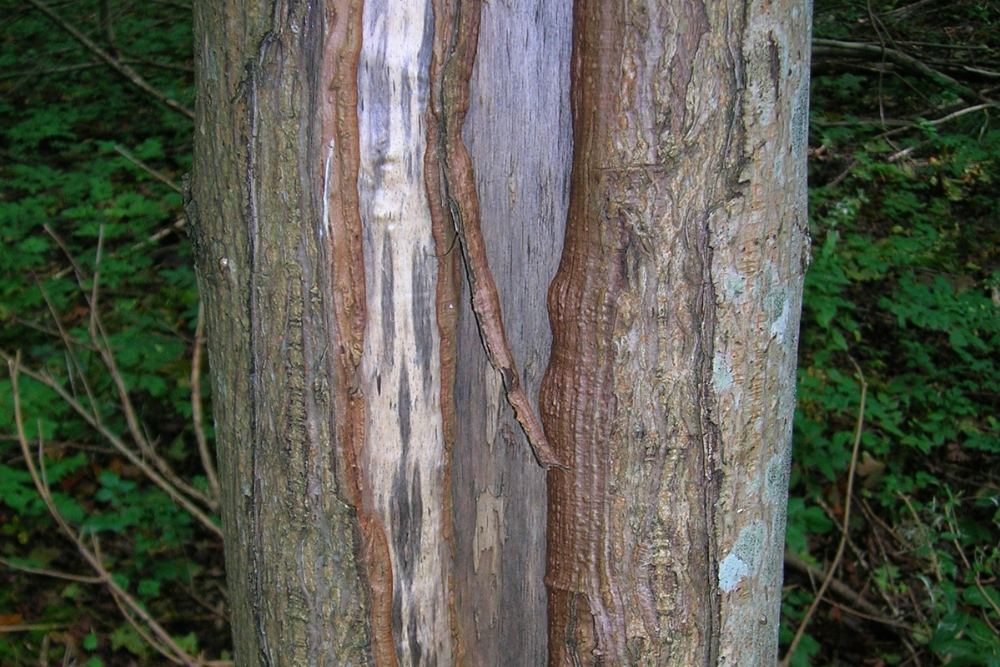
Frost cracks like this typically occur when rapid temperature changes cause the trunk to expand and contract, splitting the bark vertically.
What Causes Those Loud Popping Sounds in Northern Virginia Trees?
That sharp crack echoing through your yard on a cold night isn’t random – it’s your tree reacting to sudden temperature swings. On sunny winter afternoons, southwest-facing bark can heat up dramatically, sometimes 20–30°F warmer than the surrounding air. But once the sun drops, that warmed bark cools fast, while the inner wood cools much more slowly.
This uneven contraction creates intense internal stress. When the outer bark can’t keep up, it splits along the grain with a loud, rifle-like pop known as a frost crack. These cracks typically occur when bark temperatures drop more than 30 degrees within a few hours.
Northern Virginia’s winter patterns make this even more likely. Urban heat islands in areas like Alexandria and Arlington amplify the effect—hard surfaces absorb heat during the day, then release it quickly at night, pushing bark temperatures through rapid swings. NOAA’s 2025–26 winter outlook predicts exactly the kind of warm-day/cold-night pattern that triggers frost cracks.
Neighborhoods with older, mature trees tend to see the most activity. Historic areas such as Old Town Alexandria, Rosemont, and Hollin Hills—where century-old elms, oaks, and sycamores are common—are especially prone to frost cracking due to both tree age and stronger urban heat effects.
Which Trees Are Most Likely to Develop Frost Cracks?
Thin-barked deciduous trees face the highest frost crack risk in Northern Virginia’s mature neighborhoods. Some species of trees most at risk include:
- Red and Scarlet Oaks: Smooth, thin bark can’t accommodate rapid temperature changes
- Norway and Red Maples: High water content makes them especially susceptible to freeze-thaw damage
- Tulip Poplars: Fast growth and thin bark combine to create high vulnerability
- Cherry Trees: Notably thin, smooth bark splits easily under temperature stress
Other species common in Northern Virginia that are at moderate risk of developing frost cracks include:
- Ash Trees: Thin bark becomes vulnerable as trees age, particularly those stressed by the emerald ash borer
- Birch Trees: Characteristically thin, peeling bark creates weak points where cracks commonly develop
- Linden Trees: Smooth, thin bark vulnerable to southwest exposure damage
Tree age significantly affects frost crack development. Mature trees between 30 and 80 years old face the greatest risk because they’re large enough to experience significant temperature differentials but may lack the thick bark that protects very old trees. Previous injuries from pruning wounds or lawn mower damage create weak points where new splits often develop.
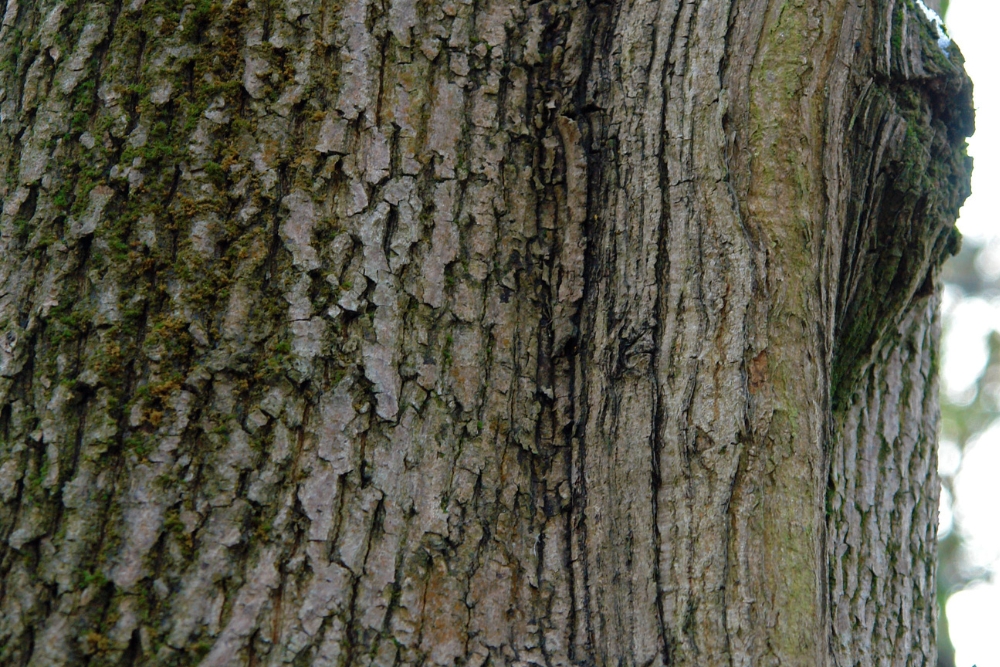
Frost cracks can lead to long-term problems for your trees and continued stress.
How Do You Know When Frost Cracks Need Professional Attention?
Frost cracks appear as distinctive vertical splits running up and down tree trunks, typically on southwest-facing sides that receive direct afternoon winter sunlight. Fresh cracks show exposed inner wood appearing lighter than the surrounding bark, with possible sap seepage and rough bark edges.
Most cracks become visible in late winter or early spring rather than immediately after formation. Healthy trees possess remarkable healing abilities, with many frost cracks closing naturally through compartmentalization.
Some signs you need professional help to save your tree include:
- Cracks wider than one inch or extending more than three feet up the trunk
- Cracks showing decay or fungal growth
- Multiple cracks on the same tree
- Cracks on trees with dead branches, unusual leaf drop, or other health issues
Cracks on stressed or aging trees can create perfect entry points for decay organisms, leading to weakened structure over time. That’s why spring is the ideal season for an evaluation – your arborist can assess the depth of the crack, the tree’s overall health, and whether intervention is needed.
A professional inspection also provides documentation if the damage contributes to future structural failure, especially when a tree is close to a home or high-value area of the property. An arborist can recommend monitoring, pruning, cabling, or in rare cases, removal if the crack compromises the tree’s safety.
“Northern Virginia’s winter weather patterns create ideal conditions for frost cracks in our mature tree neighborhoods. Spring assessment helps distinguish normal frost crack healing from situations requiring intervention. Many cracks heal beautifully on healthy trees, but catching problematic ones prevents bigger issues down the road.” – Ashley Davis, Owner of Absolute Tree Service
Can You Prevent Frost Cracks from Forming?
Yes, while you can’t eliminate the risk entirely, you can significantly reduce the chances of frost cracks by protecting bark from rapid temperature swings and keeping your trees healthy going into winter.
- Use tree wrap to slow down temperature swings.
Light-colored tree wrap reflects sunlight and reduces bark heating during sunny winter days. Apply it in late fall before the first hard freeze and remove it in early spring to prevent moisture buildup. - Keep trees healthy throughout the growing season.
Proper watering, seasonal pruning, and addressing issues like pests, injuries, or soil compaction help trees build resilience long before winter arrives. - Avoid late-season fertilization.
Feeding too close to winter encourages tender new growth that’s easily damaged by cold. Aim to complete fertilization by late summer. - Reduce stress before winter sets in.
Trees already struggling with drought, disease, or structural issues are far more vulnerable to frost cracks. Early intervention gives them time to recover. - Prioritize young and newly planted trees.
Their thinner bark makes them especially prone to rapid temperature fluctuations. Wrapping, mulching, and consistent care offer meaningful winter protection.
Frequently Asked Questions
Are frost cracks dangerous to my family’s safety?
Most frost cracks aren’t immediately dangerous, but extensive damage can weaken trees over time if they don’t heal properly or become infected with decay organisms. Professional assessment identifies which cracks pose potential safety risks.
Should I seal or treat frost cracks I find on my trees?
No, avoid sealing frost cracks with wound dressing or paint. Trees heal best when allowed to compartmentalize damage naturally. Artificial sealers trap moisture and encourage decay rather than prevent it.
How can I tell if the popping sound is from frost cracks or something else?
Frost crack sounds occur during the coldest part of clear nights when temperature differences are greatest. The sounds are sharp and sudden, seeming to come from individual trees. Check southwest-facing sides of nearby trees for fresh vertical bark splits.
When should I schedule a professional assessment after winter?
Schedule assessments in early to mid-spring after buds break but before full leaf-out. This timing allows arborists to evaluate frost crack healing while assessing overall winter stress response. Spring tree care includes frost crack evaluation as part of seasonal maintenance.

If the damage to your tree is too severe from frost cracks, removal might be the only option to protect your property from a tree emergency.
For Expert Frost Crack Assessment in Northern Virginia, Call Absolute Tree Service
While those startling nighttime sounds can be concerning, many frost cracks represent natural processes that healthy trees handle successfully. The key lies in professional evaluation to distinguish between normal healing and situations requiring intervention.
At Absolute Tree Service, our ISA Certified Arborists understand the unique challenges facing Northern Virginia trees. Current forecasts make frost crack assessment especially important this season.
Don’t let winter mysteries worry you about your trees. Call us at 703-969-6207 to schedule your spring frost crack assessment or request an estimate online for expert evaluation and guidance.
For the Absolute Best Tree Service in Northern Virginia, call Absolute Tree Today!
Author Profile: Ashley Davis
Over the last 19 years, Absolute Tree has grown a reputation as one of the premier tree service companies in the Northern Virginia areas. And there’s a good reason for this—we love trees and our passion for them shows. When you call on Absolute Tree for tree service, you aren’t just getting “some guys who cut down trees.” You’re hiring highly skilled arborists who understand the growth of trees and consider tree care an art form.
Recent Articles


About Absolute Tree Service
Over the last 19 years, Absolute Tree has grown a reputation as one of the premier tree service companies in the Northern Virginia areas. And there’s a good reason for this—we love trees and our passion for them shows. When you call on Absolute Tree for tree service, you aren’t just getting “some guys who cut down trees.” You’re hiring highly skilled arborists who understand the growth of trees and consider tree care an art form.
Stay Up-to-date!
Swing in each month for new articles, pest alerts, local resources, tree care tips, tree health updates, and landscape maintenance ideas
