Severe storm damage isn’t new to Fairfax County, but last spring’s tragedies highlighted the risk when two separate storm-related incidents resulted in fatalities. While it’s uncertain whether those particular trees were ash, the events showed how quickly compromised trees can become dangerous during storms.
What many homeowners don’t realize is that dead ash trees killed by emerald ash borer (EAB) are even more prone to sudden failure. With tens of thousands of ash trees lost to EAB across the state, the likelihood of more incidents in future storms is unfortunately high.
Key Takeaways
- Dead ash trees killed by emerald ash borer are significantly more dangerous than other dead trees due to extreme brittleness.
- EAB creates S-shaped galleries that compromise structural integrity, leading to unpredictable failure without warning signs.
- Property owners are liable for damage caused by hazardous trees on their land, with potential for lawsuits and insurance complications.
- Fairfax County requires permits for tree removal on properties over 2,500 square feet, with special restrictions in Resource Protection Areas.
- Emergency removal costs significantly more than planned removal, and many companies refuse EAB tree work due to safety risks.
What Makes EAB-Killed Ash Tree Especially Hazardous
Understanding what makes EAB-killed ash trees uniquely hazardous requires looking at both the pest’s destructive feeding behavior and how that damage affects tree structure over time.
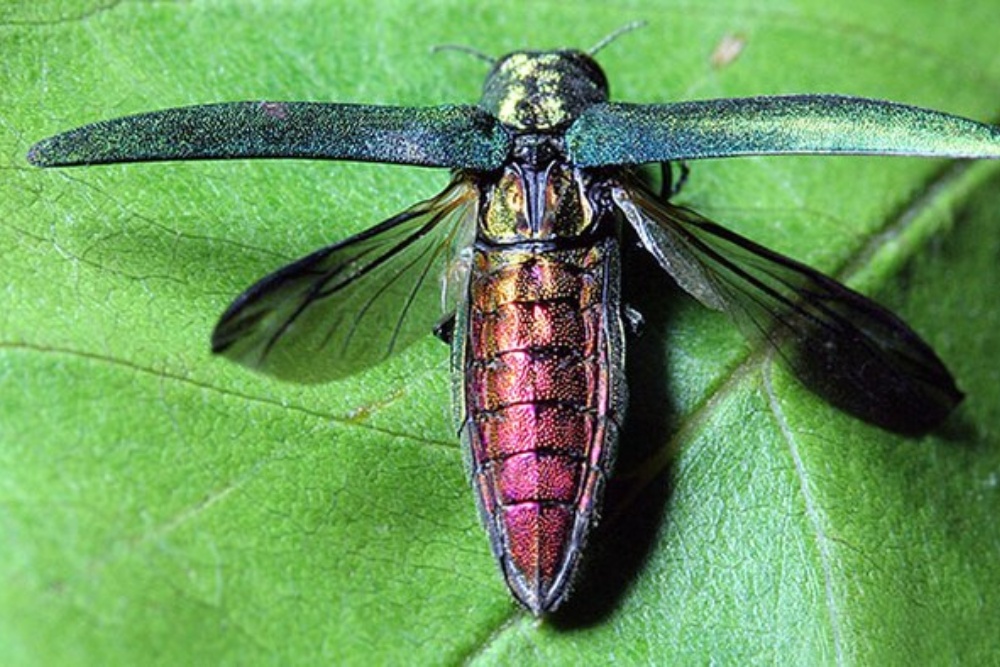
Adult emerald ash borer beetles have distinctive metallic green heads and bronze bodies, emerging from infested trees between May and June.
EAB Damage Weakens Trees from the Inside Out
The emerald ash borer has earned its reputation as one of the most destructive forest pests in North American history, with a high mortality rate in ash trees outside its native range. When EAB larvae feed under the bark, they create distinctive S-shaped galleries that completely girdle the tree, severing the tree’s ability to transport water and nutrients while compromising structural stability.
According to Penn State Extension research, ash trees killed by EAB becomes extremely brittle compared to other dead trees. The National Parks Service reports that extensive ash trees have been lost due to EAB damage.
“I’ve never encountered trees that fail as unpredictably as ash trees after EAB attacks them. The larvae damage creates a perfect storm of structural weakness that makes these trees exceptionally dangerous. Ash trees killed by EAB may look fine one day and catastrophically fail the next. This is why we always recommend immediate removal once EAB damage is confirmed.” — Alex Shy, ISA Board Certified Master Arborist at Absolute Tree
Many experienced tree service companies actually refuse to remove EAB-killed ash trees due to their extreme unpredictability and danger to crews.
Dead Ash Trees Don’t Show Obvious Warning Signs
Trees typically die 2-5 years after initial EAB infestation, but once they’re dead, failure can occur much faster than with other species. The brittleness of EAB-damaged wood means entire trees or large branches can fail without warning signs. That means no gradual leaning, no obvious weak points, no seasonal patterns, just a sudden collapse.
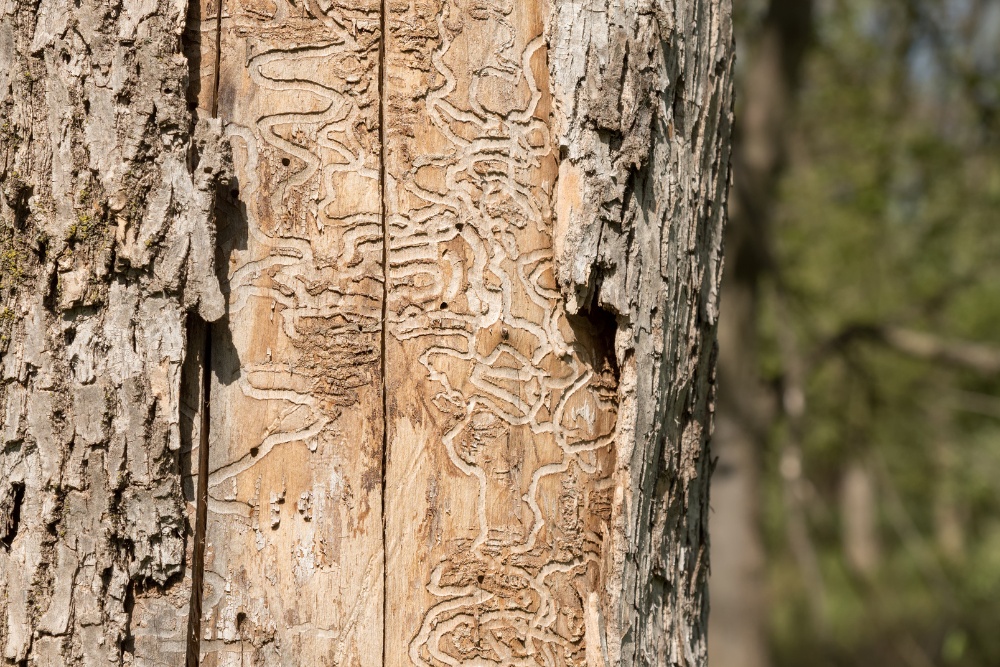
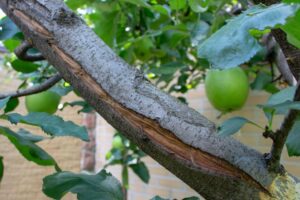
The telltale S-shaped galleries created by EAB larvae are visible when bark falls away from infested ash trees, indicating severe structural damage.
How Can I Tell If My Ash Tree Was Killed by Emerald Ash Borer?
Early identification of EAB damage can mean the difference between safe, planned removal and dangerous emergency situations. The most distinctive marker is D-shaped exit holes about 1/4 inch in diameter scattered across the trunk and branches. If you can safely examine areas where bark has fallen away, you’ll see characteristic S-shaped galleries created by EAB larvae.
You may also notice:
- Top-down canopy dieback
- Bark splitting
- Vertical cracks
- Epicormic shoots (small sprouts growing directly from the trunk)
- Light-colored patches on the trunk where woodpeckers have stripped bark to reach EAB larvae
PRO TIP: Pay attention to any adult EAB with their distinctive metallic green bodies. If you see the adults flying around, you’ll know that a nearby tree is likely infested with the larvae.
What Neighborhoods in Fairfax County Have the Most At-Risk Ash Trees?
Certain areas of Fairfax County face higher concentrations of at-risk ash trees based on development patterns and planting practices from previous decades.
Established neighborhoods developed between the 1950s and 1980s face the highest risk because ash trees were commonly planted during this period. Areas like McLean, Great Falls, Vienna, and older sections of Fairfax and Springfield feature mature tree canopies where ash trees reached substantial size before EAB arrived.
Neighborhoods near wooded areas where EAB spreads naturally also show higher concentrations of affected trees.
When to Remove a Dead Ash Tree After EAB
Peak emergence occurs from May through June, but by the time you see obvious symptoms, the tree has likely been compromised for 2-3 years. Don’t wait for definitive confirmation if multiple signs point to EAB damage.
All North American ash species in our region are susceptible. You need to remove these trees as soon as you confirm with an arborist that they have died from an EAB infestation.
PRO TIP: Recognizing signs your tree needs to be removed is crucial for safety, and the benefits of hiring an arborist become especially important when dealing with potentially dangerous EAB-killed trees.
Do I Need a Permit to Remove a Dead Ash Tree in Fairfax County?
Navigating Fairfax County’s tree removal regulations can be complex, but understanding the requirements upfront can save time and prevent costly violations.
Fairfax County requires permits for tree removal activities constituting land disturbing activity on properties larger than 2,500 square feet. Contact the Engineer of the Day for the determination of whether your specific situation requires a permit.
Properties within Resource Protection Areas (RPAs) face additional restrictions that generally prohibit tree removal without obtaining a waiver. Fairfax County provides online mapping tools, including the Interactive RPA Map, to help determine if your property falls within these areas.
Why Removing Dead Ash Tree Removal Requires a Professional Arborist
Dead ash trees require professional removal because they become extremely brittle after emerald ash borer damage, making climbing and cutting unpredictable and unsafe. EAB-killed ash lose structural integrity quickly and can shear or snap without warning.
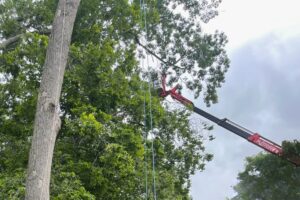
Because of that brittleness, traditional climbing and rigging techniques aren’t always safe. Many removals require aerial lifts, cranes, or specialized equipment to prevent limbs from dropping onto nearby homes, garages, or power lines – especially in suburban settings where clear drop zones are limited. These logistics make dead ash removal more complex than standard tree work and limit the number of companies equipped to take the job.
Certified arborists understand EAB-specific failure patterns, have the proper equipment, and can remove the tree safely before failure, rather than reacting to it after the fact.
Frequently Asked Questions About Dead Ash Tree Removal
How quickly do ash trees die from emerald ash borer?
Ash trees typically die within 2-5 years after EAB infestation, with noticeable damage appearing 3-4 years after initial infestation. Once dead, they become increasingly dangerous over time.
Can I wait until spring to remove my dead ash tree?
No, dead ash trees should be removed immediately due to their unpredictable failure pattern and extreme brittleness compared to other dead trees. Waiting increases safety risks significantly.
Will my homeowner’s insurance cover damage from a falling dead ash tree?
Insurance typically covers tree damage to structures but may deny claims if they determine negligence in maintaining known hazardous trees. Emergency removal is usually required before repairs can begin.
Why won’t some tree companies remove EAB-killed ash trees?
Many companies avoid EAB-killed ash trees because they’re significantly more dangerous than other dead trees due to brittleness and unpredictable failure patterns. Without specialized lifts, cranes, or rigging systems, crews can’t work safely in the canopy — and most smaller tree companies don’t have the equipment or training required to remove these trees without putting their workers at risk.
When is the best time to remove a dead ash tree?
The best time to remove a dead ash tree is immediately upon identification of death or severe decline. Dead ash trees become increasingly dangerous over time and can fail without warning, making any delay a safety risk.
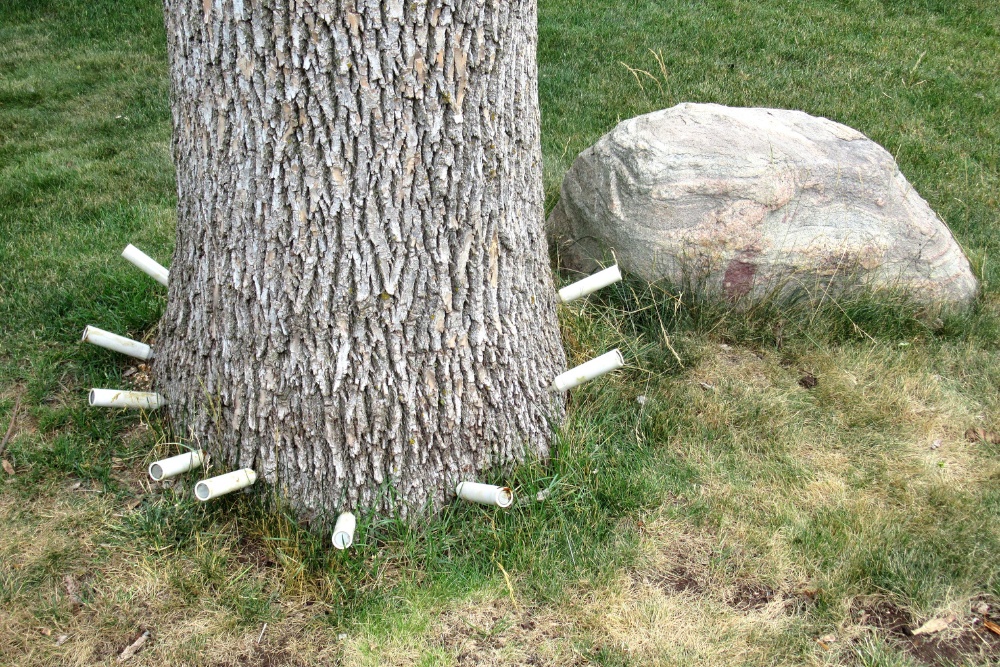
Trunk injection treatments can help protect healthy ash trees from EAB infestation, but are not effective once trees are already dead or severely damaged.
Remove Dead Ash Trees Safely with Absolute Tree
The serious nature of EAB-killed ash trees demands immediate action rather than wishful thinking. Every day of delay increases the risk to your family, neighbors, and property while potentially exposing you to significant legal and financial liability.
Professional assessment and removal represent the only safe approach to managing these uniquely dangerous trees. The team at Absolute Tree is ready to help inspect and remove any of your dead ash trees to protect your property and family from danger. Call us today at 703-969-6207 or request an estimate online for tree removal.
For the Absolute Best Tree Service in Northern Virginia, call Absolute Tree Today!
Author Profile: Ashley Davis
Over the last 19 years, Absolute Tree has grown a reputation as one of the premier tree service companies in the Northern Virginia areas. And there’s a good reason for this—we love trees and our passion for them shows. When you call on Absolute Tree for tree service, you aren’t just getting “some guys who cut down trees.” You’re hiring highly skilled arborists who understand the growth of trees and consider tree care an art form.
Recent Articles

About Absolute Tree Service
Over the last 19 years, Absolute Tree has grown a reputation as one of the premier tree service companies in the Northern Virginia areas. And there’s a good reason for this—we love trees and our passion for them shows. When you call on Absolute Tree for tree service, you aren’t just getting “some guys who cut down trees.” You’re hiring highly skilled arborists who understand the growth of trees and consider tree care an art form.
Stay Up-to-date!
Swing in each month for new articles, pest alerts, local resources, tree care tips, tree health updates, and landscape maintenance ideas

