We Go Out On a Limb For You
Our fully licensed and insured arborists are available 24/7
What to Expect
The tree health professionals at Absolute Tree are experts in insect and disease diagnosis, treatment, and prevention. You can expect a detailed assessment of your trees to identify the cause and extent of the problem. We'll give you recommendations for the best course of action to remediate the current situation and suggestions for how to prevent the issue from coming back.
Keep Your Trees Healthy and Bug Free
Just like people, trees get sick, too. Of course, since trees can't tell us how they feel, diagnosing a tree disease is tougher than diagnosing a human one. Still, managing tree ailments, whether caused by disease or insect pests, is essential to the life and health of your trees. Fortunately, we have highly educated and skilled arborists who are trained in the area of tree disorders and can come to the rescue. If you suspect a tree disease has infected your greenery or an insect pest is attacking your trees, call our Absolute Tree pest and disease experts at 703-969-6207.


How Important is Treating My Sick Tree?
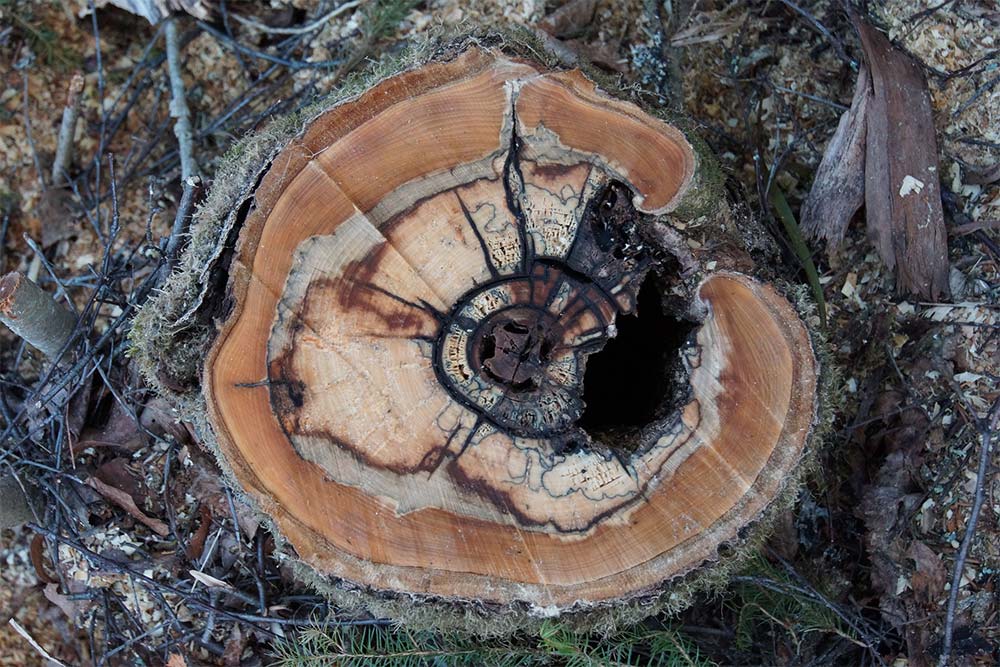
In a word—very. Tree disease and proper diagnosis should not be taken lightly. If not treated properly, your tree’s disease could spread to your entire grove and result in permanent damage. There are many diseases that can attack your remaining treeline. Typically, they are classified in three ways:
Fungus
Learn more
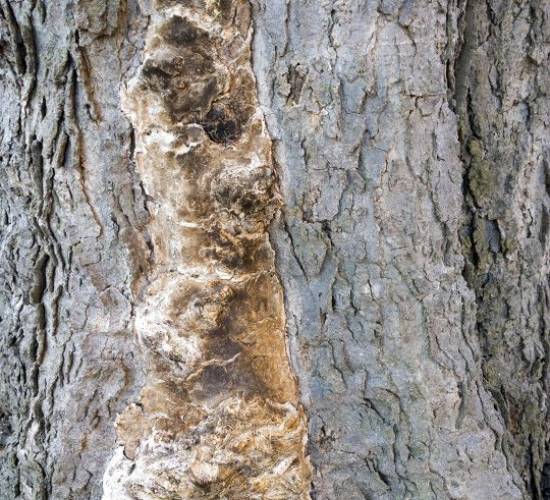
Fungal diseases can affect any part of the tree. Often there is the tell-tale sign of mushrooms or conches growing from the tree's base, while other times, fungi attack the tree's roots, causing the condition "root rot."
Bacteria
Learn more
Bacteria are microscopic organisms often spread from tree to tree by pests. Bacterial diseases can cause your tree to have cankers and galls, in addition to the leaves showing spots or looking scorched. Some bacteria affect tree physiology by incorporating their DNA into the host tree.
Viruses
Learn more
Viruses are microscopic pathogens that require living cells to host their reproduction. Viruses are often associated with stunted growth, reduced cold tolerance, and decreased photosynthesis. Viruses attack trees through tissue wounds or can be spread by insect pests such as aphids, leafhoppers, and nematodes.
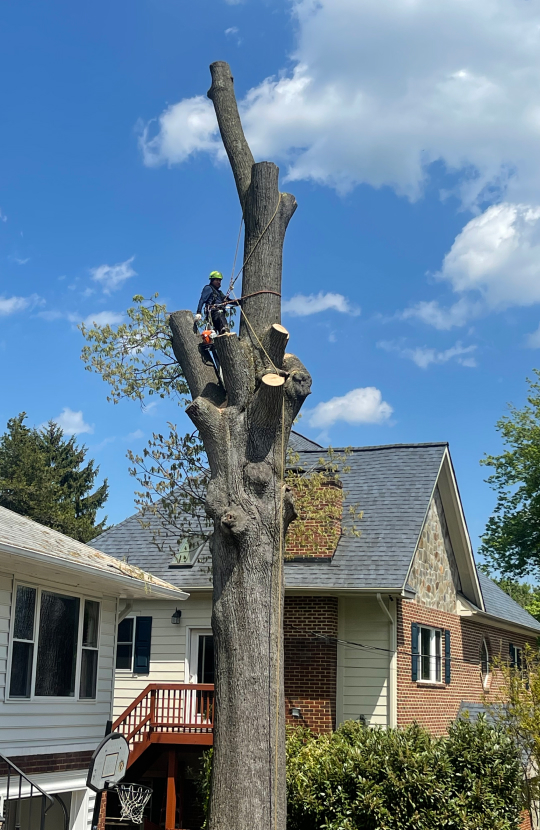
If you notice spotted leaves or strange growths on your tree limbs, don’t panic. Our tree doctors can easily determine if your trees are affected by a fungus, bacteria, or a virus and provide proper solutions to bring your trees back to full health. Or, if the tree cannot be saved, we can quickly remove it and haul away the remains to prevent the pest or disease from spreading.
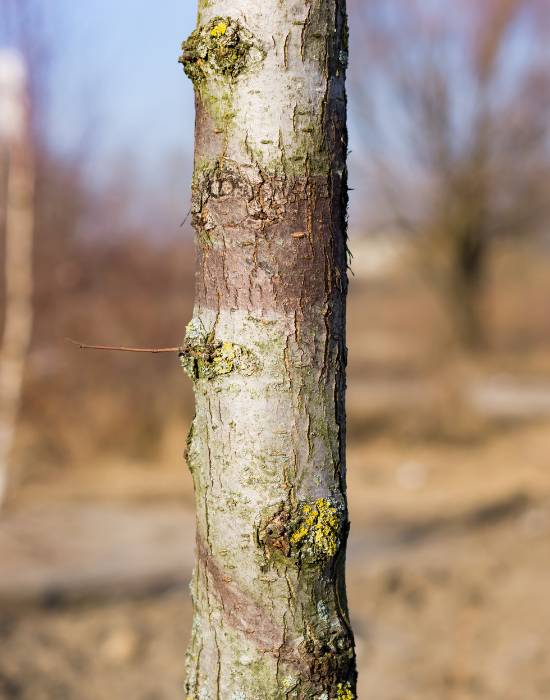
My Tree Has Funny Growths, Now What?
Call in the tree health professionals! A certified arborist can inspect your tree and diagnose the problem. Sometimes, the solution can be simple—as easy as anti-fungal treatments and trunk injections. Other times, whole trees must be removed.
Whatever you do, don’t take matters into your own hands. Call a skilled tree surgeon for a proper diagnosis and treatment before it is too late.
Bug Off, Insects!
Another reason to follow good tree care and maintenance is so your trees remain healthy and strong. The last thing you want on your property is a bunch of fragile trees. Weakened trees are highly susceptible to parasites and pests and have very little chance of survival if attacked by insects. Stressed or weakened trees can also become a safety hazard during high winds and thunderstorms.
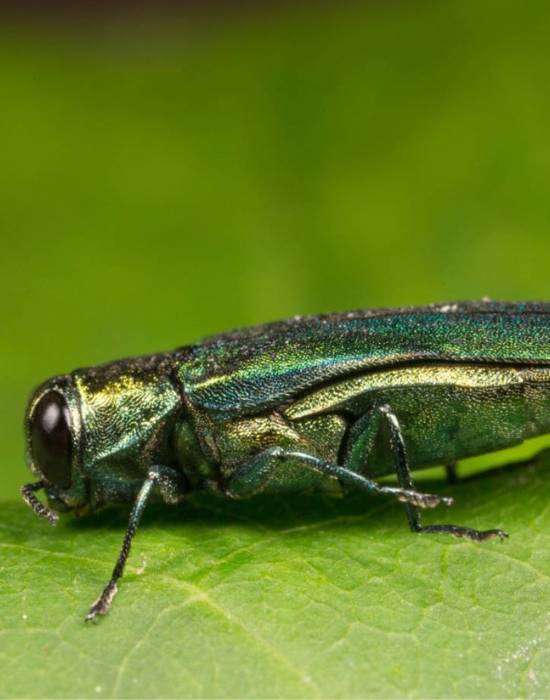
The following are infestation signs that are typical of cicadas, aphids and weevils:


We have used Absolute Tree Service several times over the years. They've always provided a great price and excellent, prompt service. They clearly make the health of the trees a priority, which we appreciate. Their crews are safe and careful, and respectful of our property.

Alan R.
Help, There Are Insects Attacking My Trees!
Diagnosis is key. And that is where we can help. One of our certified arborists can make a house call to identify and inspect the infestation that might be plaguing your trees. In most cases, our experts can diagnose your tree issue and provide an immediate treatment option—such as a tree injection.
We have experience in treating infestations from the following pests:
Aphids
Learn more
Aphids are small yellow to light green insects that use piercing mouthparts to suck juices from plants and trees. Large infestations can hurt the aesthetic of our trees and, in high enough numbers, kill them.
Weevils
Learn more
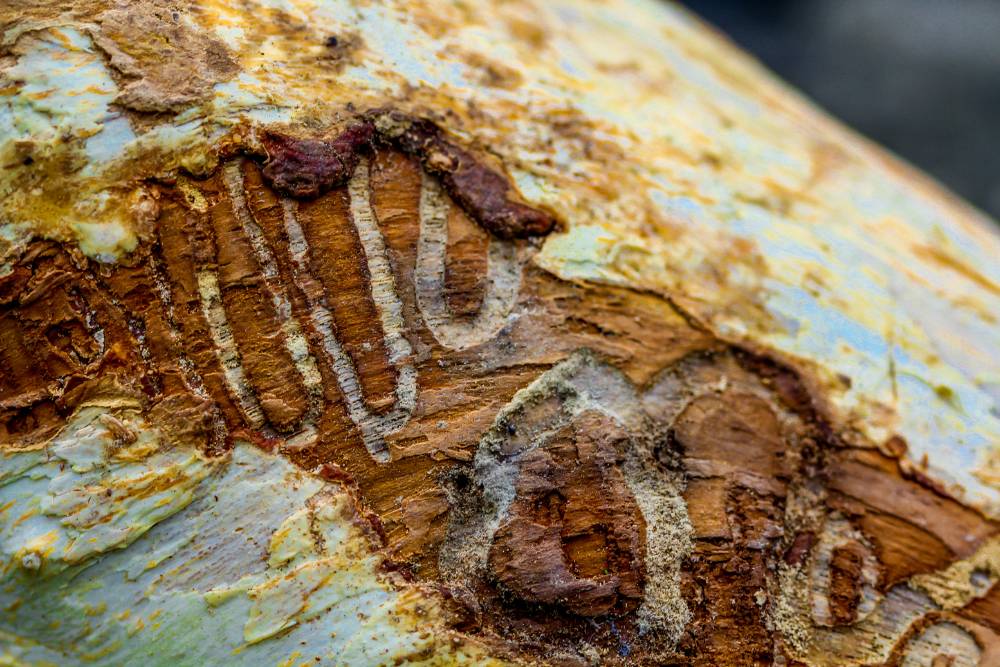
Weevils are a type of beetle that are known to attack white pines and yellow poplars in Virginia. Adult female weevils chew holes into trunks and branches where they deposit their eggs. Upon hatching, the weevil larvae feed on the interior of the branches.
Borers
Learn more
Borers are chewing insects that feed on the inner bark and wood of trees. Most of these destructive pests are the immature forms (larvae) of both moths and beetles—borers cause branch die-back, structural weakness, and decline in plants and trees.
Moths
Learn more
Moths like the spongy moth are pests in Virginia. The spongy moth caterpillars feed on many tree species, but are shown to prefer oaks. In fact, Virginia has introduced "slow the spread" initiative that works to minimize the movement of this pest.
Beetles
Learn more
Beetles like the southern pine beetle are considered highly destructive pests. In high enough populations, beetles can decimate trees, particularly if the trees are already stressed. These pests have occasionally reached outbreak levels in Virginia forests.
Cicadas
Learn more
Cicadas are brood insects, meaning that groups of them emerge after a long period of dormancy as long as 17 years. These pests affect trees not by feeding on them but when the adult females cut slits into tree branches to lay their eggs.
Locusts
Learn more
Locusts are similar to grasshoppers. However, locusts migrate in enormous swarms. These swarms of leaf-eating locusts have been known to decimate crops and can severely injure trees by voraciously consuming foliage.
Worms
Learn more
Worm pests are not true worms but large collections of caterpillars, such as the fall web worm, bag worms, and tent caterpillars. These pests are voracious eaters who affect the aesthetics of ornamental plants by chewing leaves and creating their large webs.
Call Absolute Tree for the Absolute Best Insect Pest Treatment & Prevention!
If you notice spotted leaves or strange growths on your tree limbs, don’t panic. Just give Absolute Tree a call. Our tree doctors can easily determine if you have a fungus, bacteria or a virus and provide proper solutions.
Frequently Asked Questions About Tree Disease and Insect Control
With so many different pathogens and destructive pests damaging trees in the Northern Virginia area, we get a lot of calls from homeowners, property managers, and business owners asking for help identifying and controlling diseases and infestations.
We pulled together answers to some of the most common questions. But if you need more information, give us a call at 703-969-6207, and we’ll get you an answer!
Why Hire Absolute Tree for Tree Health Management?

Tree Health, Insect Control & Disease Treatment in NoVA
When your trees are sick, you want a local arborist with extensive knowledge of the pests, fungi, bacteria, and viruses that infect and infest trees in Northern Virginia. You can rely on the tree health experts at Absolute Tree for insect control and disease treatment in these locations:

Annandale, VA
-
Clifton, VA
-
Falls Church, VA
-
Lakeridge, VA
-
Lorton, VA
-
Reston, VA
-
Woodbridge, VA
If your trees are infested with pests or looking sick, give us a call at 703-969-6207. You can also use our online form to request an arborist visit.
Learn More About Northern Virginia Insect Pests & Tree Diseases
How to Prevent Insect & Disease Problems on Trees